



Recommendation System.
Personalized ML recommendations for growing retention and revenue across gaming platforms
At the meeting, we will discuss your objectives and demonstrate how predictive models work with data in real-life scenarios
We’ll send you an email notification so you can receive our newsletter
Learn what a recommendation system is in iGaming, how recommender systems work, key recommendation system models, types, examples and future AI-driven trends.

A recommendation engine has become a core part of the modern iGaming experience. Instead of showing every visitor the same lobby, it helps an operator arrange games, bonuses, tournaments, and content around likely interests. So, what is recommendation system technology in this context? It is software that analyses signals such as user preferences, user behavior, device, location where permitted, and recent activity to suggest the next most relevant option.
Put simply, what is a recommendation system for an online casino or sportsbook? It is a decision layer that turns a large catalogue into a more useful, personal journey. A new player may see accessible slot titles and clear onboarding content, while an experienced live-casino visitor may receive a relevant table, event, or tournament card. The goal is not simply to increase clicks. A responsible system should reduce choice overload, improve discovery, and support long-term user satisfaction.
In iGaming, recommendations require extra care. Entertainment choices can change rapidly, player protection rules apply, and promotional content must not be pushed to excluded, self-limited, or otherwise ineligible users. The best systems therefore combine relevance with eligibility rules, consent controls, and safer-gambling logic.
To answer how a recommender system work, it helps to view it as a pipeline. It collects approved signals, prepares them for analysis, estimates relevance, and displays a ranked selection in a suitable placement. The engine does not “know” a person in a human sense. It calculates which item is most likely to be useful for a particular user under a defined set of rules.
The process starts with input data. Depending on consent, legal requirements, and product design, this can include pages viewed, games opened, sessions, deposits, bet or game categories, device type, language, and time of day. Search queries and search history can also show intent when an operator offers a searchable lobby.
Useful data is not limited to transactions. User item interactions—such as opening a game card, adding a title to favourites, watching a preview, or dismissing a suggestion—help distinguish curiosity from genuine interest. Users data should be minimized, protected, and retained only for legitimate purposes. Sensitive or restricted data must never be used in a way that undermines player safety.
Raw events are noisy. A player can open a title by accident, return after a long break, or sample a game only once. Data filtering removes duplicates, bot traffic, invalid events, and signals that should not affect recommendations. The platform then converts activity into usable features: preferred volatility range, genre affinity, session patterns, language, or interest in live dealer content.
For many platforms, the starting point is a user item matrix: rows represent players, columns represent games or offers, and cells describe interaction strength. At scale, this becomes a large user item matrix with many empty cells, because no player can try every product. Data science methods estimate the missing relationships without treating every click as equal.
The prediction layer uses machine learning models to score candidate items. A score might represent the chance that a visitor will open a game, continue a discovery session, or find a content card useful. The model can compare similar players, match game attributes to a profile, or combine both approaches.
Training data should include positive and negative signals. For instance, completed gameplay or an explicit favourite may be stronger evidence than a brief impression, while repeated dismissal can indicate poor relevance. The engine should also apply business and compliance constraints before ranking: an item unavailable in a market, unsuitable for the player’s status, or inconsistent with safer-gambling rules must be removed.
Finally, the system delivers a short ranked list to the lobby, game page, email, push notification, or in-product message. Placement matters: “Because you played…” may work on a game page, whereas a new-user lobby needs broader discovery. Contextual data—such as channel, current page, local time, or an active event—can improve timing and presentation.
Results should be monitored after launch. A high click-through rate alone is not enough; teams should assess user engagement, conversion quality, complaints, opt-outs, and indicators of responsible product use. Clear labels and easy controls also make recommendations less intrusive.
An iGaming catalogue can include thousands of slots, live tables, sports markets, promotions, and editorial items. A generic interface makes discovery slow, particularly on mobile. Recommendation system models help operators rank this abundance so users encounter relevant options sooner, rather than scrolling through an undifferentiated list.
For the player, relevance can make the product easier to navigate. Someone who regularly explores low-complexity video slots may prefer an adjacent title with a similar theme or mechanic. A live-casino visitor may value a table suggestion in the right language or within an available stake range. These choices can improve user satisfaction because the experience reflects demonstrated interests instead of a one-size-fits-all campaign.
For the operator, the value extends beyond an immediate conversion. Better discovery can support repeat visits, healthier content exploration, and customer retention. It also gives product teams a structured way to learn what works in each region, channel, or lifecycle stage. However, success should not be measured by revenue alone. A well-governed programme balances commercial KPIs with opt-out rates, fairness checks, eligibility controls, and responsible-gaming safeguards.
A practical recommender system example is a personalized game rail in a casino lobby. If a player has engaged with several mythology-themed slots from different studios, the system can surface other titles with comparable themes, features, or pacing. It can diversify the list so that the rail does not show five near-identical games from the same provider.
Another example of recommender system use is a returning-player screen. Rather than presenting a blanket bonus message, the platform may prioritize a recently played game, a saved favourite, or a relevant tournament—only where the player is eligible and the communication passes internal compliance rules. This creates continuity without assuming that every visitor wants the same incentive.
A sportsbook can use the same principle for content rather than casino games. It may suggest leagues a visitor follows, upcoming events related to viewed markets, or educational content for a feature the player has explored. Recommendations should remain informative and optional, not pressure-driven.
A generative ai recommender system example could be an assistant that converts approved catalogue metadata into a brief, plain-language explanation of why several games were selected: “Suggested because you recently viewed live roulette and prefer English-language tables.” Generative AI should explain or summarize choices, while the underlying eligibility, risk, and ranking controls remain deterministic and auditable.
The main recommender system types differ in the signals they prioritize. In practice, operators often combine them because a single approach rarely handles new users, new games, real-time changes, and regulatory constraints equally well. These are the most common types of recommendation system machine learning teams adapt for iGaming.
Collaborative filtering identifies patterns across a population. If people with similar activity tend to engage with certain games, the system may recommend those games to another player with a comparable profile. Collaborative filtering systems can work well when there is enough interaction history and a broad catalogue.
Its weakness is the cold-start problem. A new player has little history, and a new game has few interactions. The system can also over-focus on popular content if diversity and novelty are not explicitly included.
Content-based filtering looks at item characteristics. For games, this may include provider, genre, theme, RTP category where relevant, mechanics, volatility label, languages, or visual style. It recommends items that resemble those a player has already explored.
This approach is useful when behavioural history is sparse. It also provides clearer explanations, such as “similar to games you viewed in the adventure category.” Accurate and complete catalogue metadata is essential; poor tags create poor results.
Hybrid systems blend behavioural and content signals. They may use collaborative scores where there is rich history, content similarity for new items, and rules for exclusions or diversity. A hybrid design often produces more stable outcomes than either method alone.
For example, a ranking can combine genre affinity, similar-player activity, freshness, and a cap on repeated providers. The result remains personalized without becoming repetitive.
Knowledge-based systems use explicit rules and product knowledge rather than relying only on historical similarity. In iGaming, they can enforce regional availability, currency support, game restrictions, account status, age verification, or player-protection requirements.
They are valuable when a recommendation must be explainable and safe. A rule can state that a promotion is not displayed to a player who is ineligible, regardless of a predicted engagement score. This is where business logic should take priority over optimization.
Context-aware systems incorporate contextual data that can change from moment to moment. Current device, channel, session stage, market availability, time zone, and a live event may influence what is useful now. A mobile visitor during a short session may need a concise discovery rail, while a desktop user browsing a category page can explore a wider set.
Context should enhance relevance, not create opaque targeting. Operators should define which signals are allowed, document their purpose, and test whether each one produces a meaningful improvement.
Recommendation system models are the technical methods used to transform signals into rankings. The right model for recommendation system depends on catalogue size, data quality, latency needs, governance requirements, and the business question being solved. A sophisticated model is not automatically the best one if it cannot be monitored or explained.
Matrix factorization compresses the user item matrix into hidden factors. Instead of comparing every player with every game directly, it learns patterns such as an affinity for specific styles or mechanics. It is efficient for large interaction datasets, though it needs sufficient historical activity.
Deep learning models can process many features at once, including player activity, game metadata, sequences, and context. They can detect complex relationships, but they need careful validation, reliable training data, and protection against bias. Their added complexity should be justified by measurable gains.
Reinforcement learning can optimize recommendations over a longer journey rather than a single click. It can learn which sequence of content supports a useful experience over time. In iGaming, this approach needs strict guardrails so optimization never conflicts with customer protection or compliance objectives.
Embedding models represent players and items as vectors in a shared space. Similar games or similar behavioural patterns appear closer together, which makes candidate retrieval faster. They are particularly helpful when a catalogue is large and the system must rank many options in near real time.
Sequence models consider order and recency. A person who has moved from browsing game themes to opening live-dealer pages may have a different current intent than their long-term profile suggests. These models can react to changing user behavior without discarding established preferences.
Real-time models update rankings as new events arrive. They are useful for dynamic lobbies, live content, and short sessions. Still, real-time delivery requires reliable event pipelines, latency controls, fallback logic, and monitoring to avoid unstable or inappropriate recommendations.
A useful recommender system definition must include its limits: it is a probabilistic ranking tool, not an objective judge of what a player should choose. Predictions can be wrong, incomplete, biased by historic behaviour, or distorted by poor event tracking. Teams need controls that prevent a model from turning uncertain data into overconfident targeting.
Privacy is another major issue. Operators should collect only necessary data, obtain valid consent where required, protect data in transit and at rest, and offer accessible privacy controls. Players should understand why they see a suggestion and be able to manage personalization where applicable.
Cold start remains a practical challenge. New users and new games provide little evidence, so the engine needs safe fallback recommendations based on transparent catalogue information, popularity within a permitted market, or explicit preferences. Diversity also matters: repeatedly showing the same high-scoring titles can narrow discovery and reduce trust.
Finally, responsible gaming cannot be an afterthought. Recommendations, promotional messages, and timing need eligibility checks, frequency caps, suppression rules, and independent oversight. A model should never bypass a safer-gambling restriction to improve a headline performance metric.
Effective recommendation system models begin with a clear purpose. Teams should decide whether they are solving lobby discovery, game similarity, lifecycle messaging, content navigation, or another defined use case. One model should not silently serve every surface simply because the underlying data is available.
A strong implementation also needs fallback paths. If live data is delayed or a model is unavailable, the interface should show a curated, market-approved selection rather than an empty or unfiltered catalogue. This protects both the user experience and operational continuity.
The next phase of iGaming personalization will combine faster decisioning with better governance. As artificial intelligence tools improve, platforms can use richer catalogue metadata, natural language processing, and real-time signals to make lobbies easier to explore. The central question will remain the same: what is recommendation system technology delivering to the player—genuine relevance and clarity, or simply more pressure to act?
Future systems may interpret natural-language requests such as “show strategy-friendly table games” or “find recently released fantasy slots,” then match them to validated metadata. They may use generative interfaces to explain recommendations in plain language, while a controlled ranking service determines eligibility and final ordering.
The most durable systems will be transparent, privacy-conscious, and designed for sustainable user engagement. They will reward relevance, variety, and informed choice rather than optimizing a single short-term event. For operators, that approach can turn personalization into a long-term product capability rather than a campaign tactic.
Over the past couple of years, the term “AI” has become the go-to answer to any question about technology. An algorithm selects ads—AI. A chatbot answers questions—AI. A service recommends a movie, game, or bonus—that’s AI, too.

Over the last couple of years, the term "AI" has become the go-to answer to any question about technology. An algorithm selects adverts — AI. A chatbot answers questions — AI. A service recommends a film, a game or a bonus — that’s AI too.
The fact is that this term covers a range of different technologies, each with its own limitations, implementation costs and outcomes. Let’s sort out the differences once and for all.
It is important not to confuse the two: AI is not the name of a single specific technology, but rather a whole class of approaches.
Artificial intelligence (AI) is a general term for systems that perform tasks that typically require human involvement: recognising patterns, making predictions, taking decisions, interpreting data or interacting with users.
It sounds broad — because it really is a broad concept. Netflix, which knows that on a Friday evening you want to watch a long sci-fi film starring Actor X on your Smart TV, and on a weekday morning you want to watch a short stand-up routine by the same actor on your smartphone — that’s already AI. The developer didn’t programme the system to know this, but the system identified this connection on its own from millions of micro-interactions specifically with you, and now predicts your choices more accurately than you could articulate them yourself.
The kitchen is fully equipped with all the appliances and fittings.
In short, it looks like this:
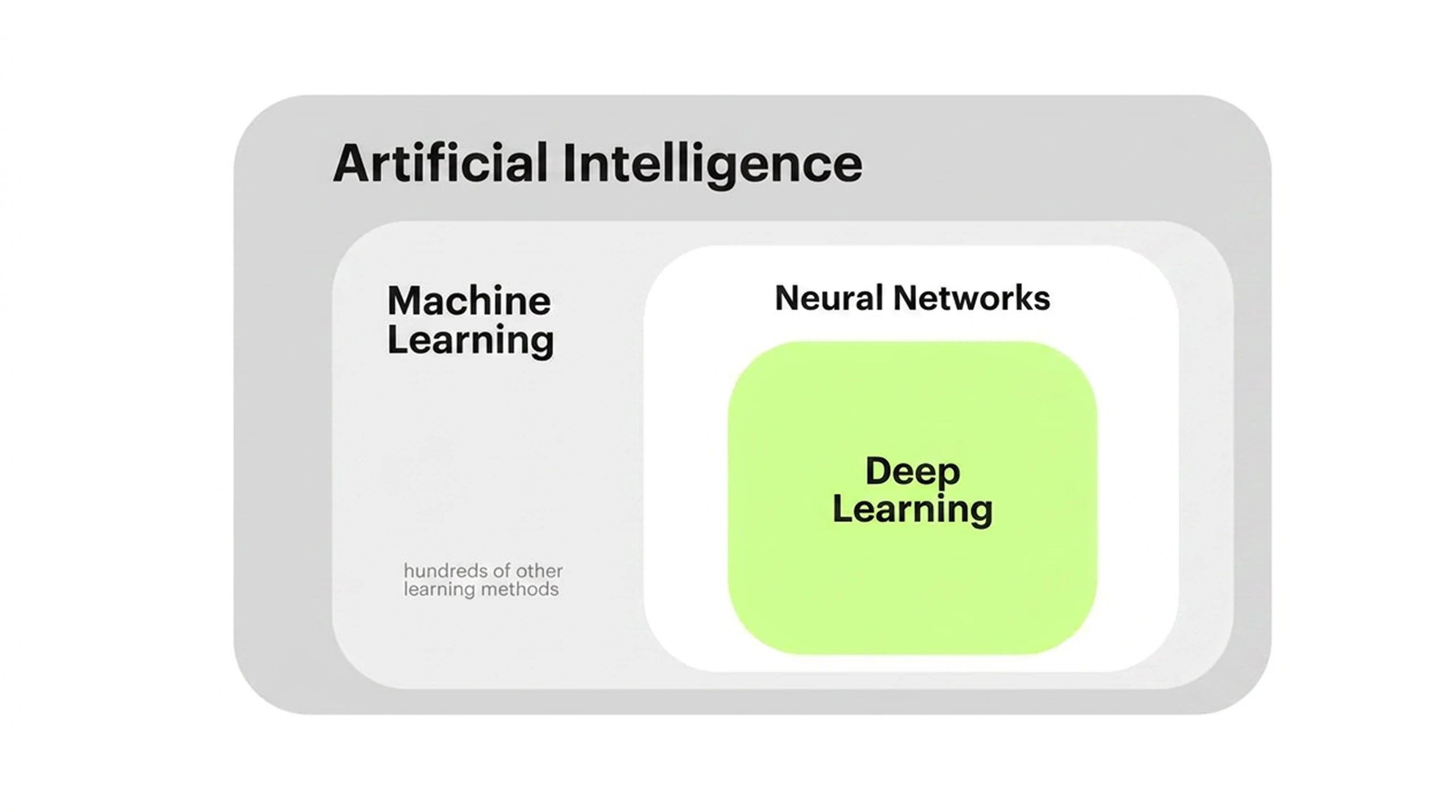
ChatGPT, Midjourney, Sora — every publication is writing about them. Yet an ML model that predicts player churn or assesses credit risk operates "behind the scenes", because we don’t have to make any effort (in the form of creating a prompt) to obtain the right content.
This is where the confusion lies: people see the eye-catching interfaces and the impressive results produced by even the simplest query, and start to believe that AI consists entirely of these elements.
In a large number of applied problems, it is not generative models that provide the greatest value, but rather more specialised forecasting and optimisation systems.
But let’s take a closer look at what this is all about. At its core lies an idea inspired by the structure of the human brain. Only, instead of a multitude of biological neurons, it uses artificial ones, organised into layers.
Each of these "neurons" receives data, processes it and passes it on through the network. During processing, the neural network identifies patterns in the input data and produces an output — for example, generated text, an image or music.
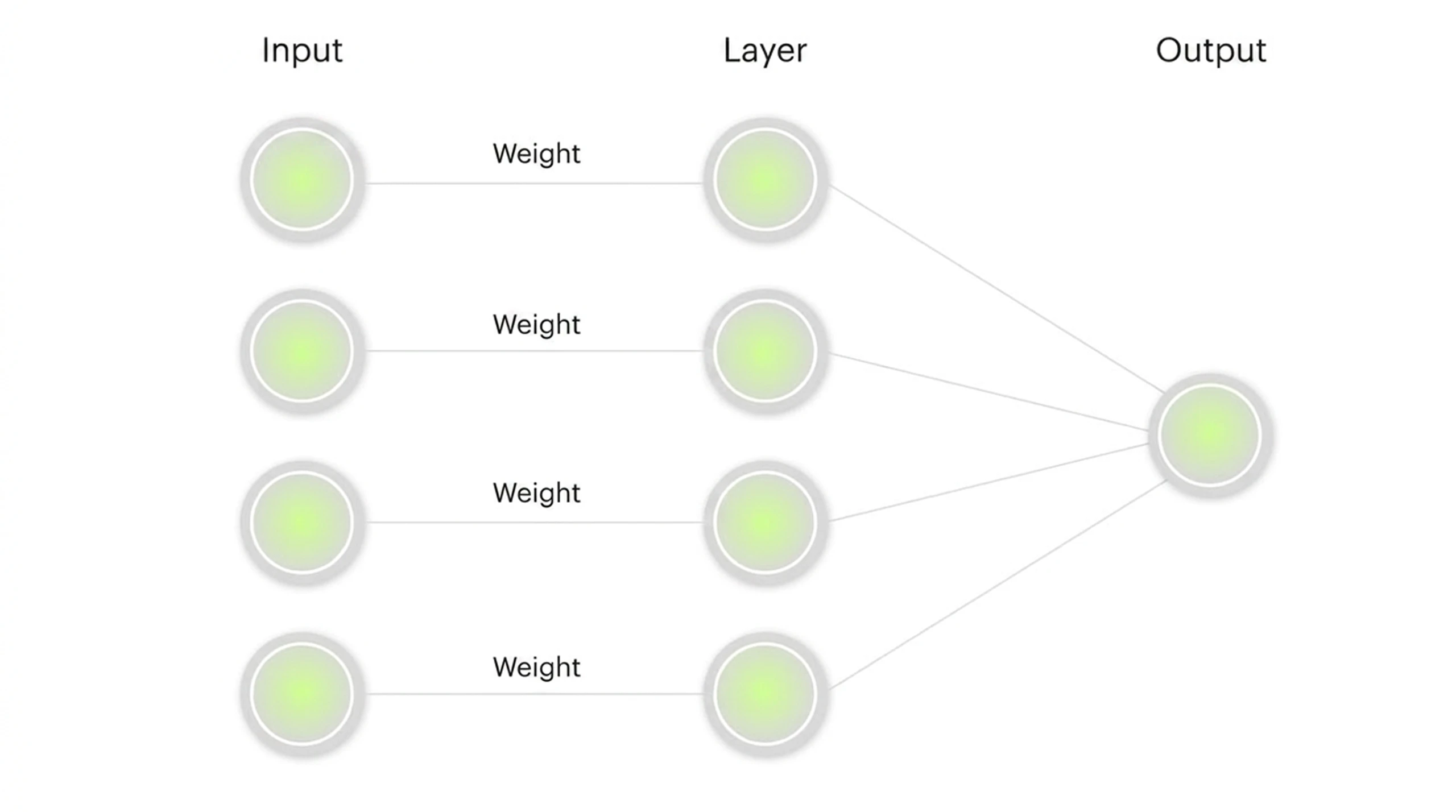
A few layers make up a neural network. A large number of layers constitute deep learning (DL). It’s the same idea, just on a different scale. This is precisely where ChatGPT and Midjourney come into their own.
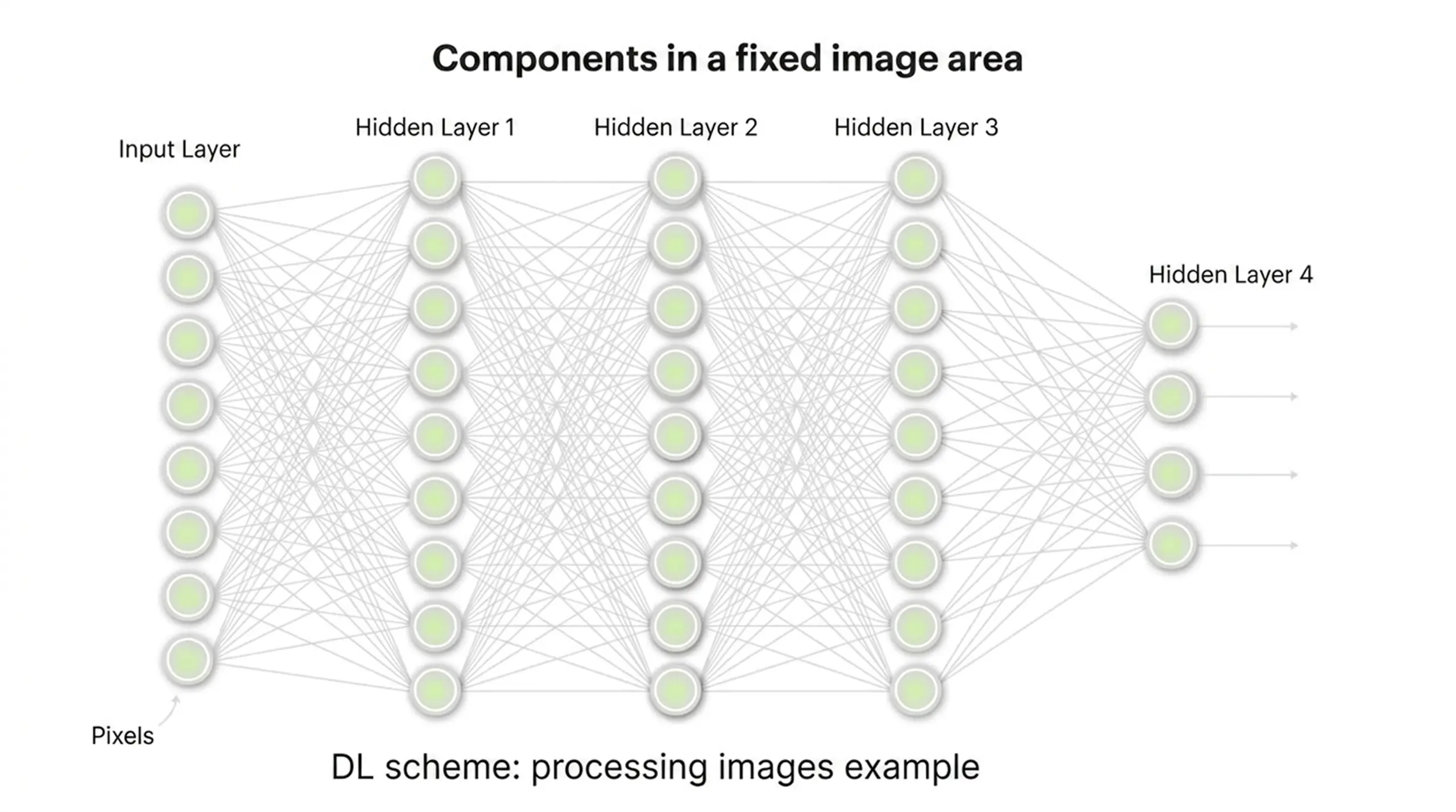
Popular neural networks such as ChatGPT and DeepSeek can handle everyday, straightforward tasks involving text, images and patterns — but this is not enough for business tasks.
So what actually works, then? Let’s have a look.
Let’s talk about our industry — iGaming. It’s easy to confuse automation, analytics and machine learning in this field.
Where ML can help drive business growth
The principle is simple. You provide the model with examples: a history of player behaviour, session results, and deposit data. It looks for patterns — what do those who have left have in common? What distinguishes a future high roller from ordinary users as early as the first week? Once it has identified these patterns, the system memorises them. And when new data comes in, it makes a prediction. There’s no magic involved — just maths.
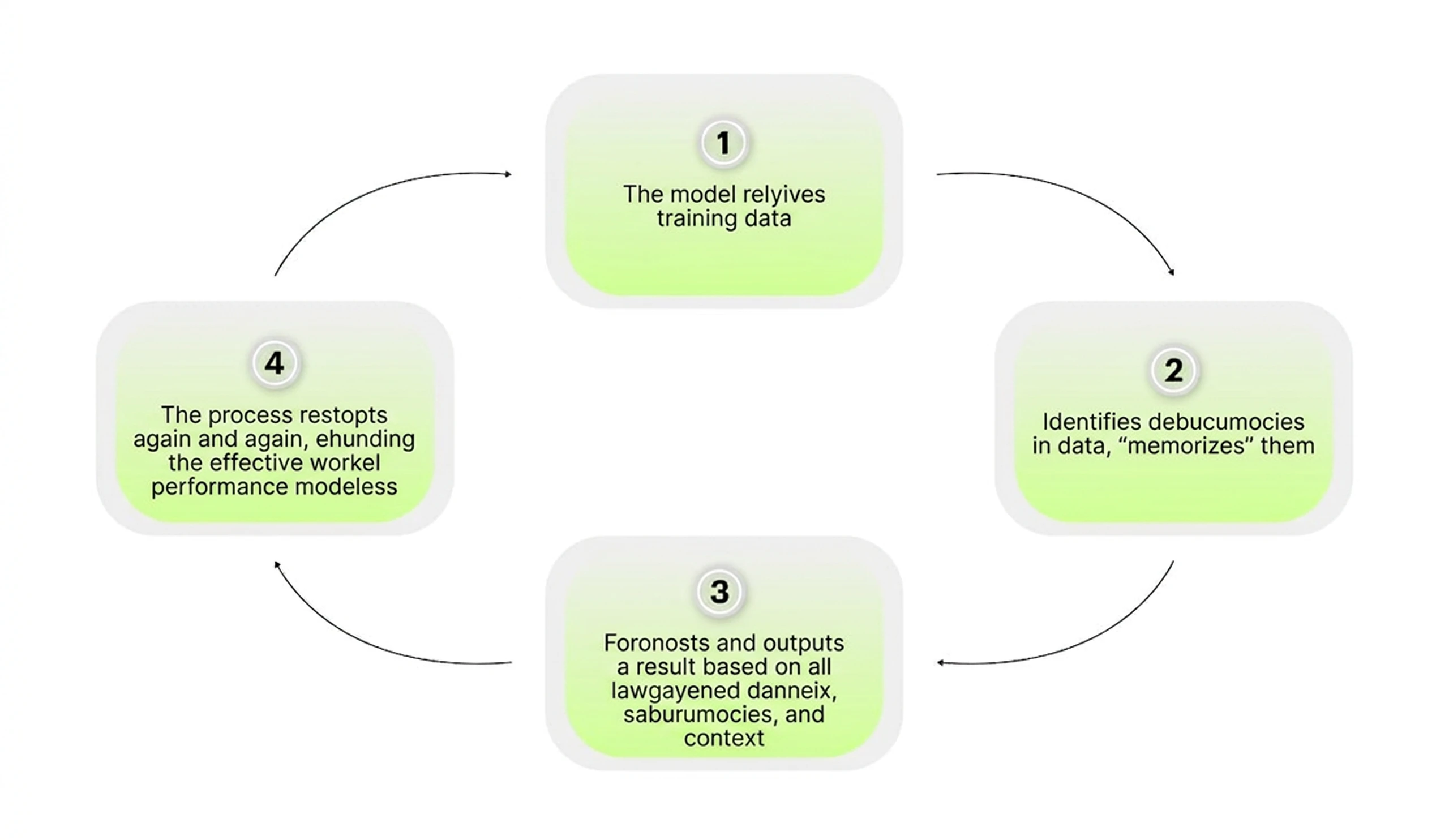
It might seem that with this approach, you could delegate all the work to a "machine", but ML isn’t always necessary. There are tasks that can be solved perfectly well using fixed rules — there’s no need to invent anything. Here’s a simple test: if a task can be solved using an if-else rule, ML is unnecessary here.
Where a "hands-on approach" is often sufficient
A neural network is a powerful tool, but it is not a one-size-fits-all solution. When it comes to working with structured data, it is often other classes of ML models, rather than neural networks, that prove most effective.
The most popular of the classical algorithms are ensemble methods — where several models "vote" on the answer: Gradient Boosting and Random Forest. In iGaming industry applications, these often outperform neural networks in terms of accuracy whilst being less costly.
Classic ML algorithms. They work much like an experienced analyst using a table: they examine the features, weigh them up and produce an answer. In typical application scenarios, they often strike the best balance between data requirements, cost of use, interpretability and model accuracy.
However, for a number of problems, neural network methods are indispensable. In situations where the problem involves unstructured data or complex representations:
When it comes to recognising, interpreting or creating such content, neural networks are usually the obvious choice.
Choosing a method is not a matter of fashion. It is a question of the task at hand, the quality of the data, and how important it is to explain why the model arrived at a particular decision.
There are usually two images of AI in people’s minds.
AI from the films — it thinks, reasons, and is almost human. ChatGPT, which writes poetry and engages in conversation. It’s beautiful and impressive, but it’s not suitable for most business tasks.
AI from the real business world — it takes your data and says: "Players with three or more sessions a day will leave within two weeks if they don’t receive a bonus during their first session after a break. Right now, we need to offer a bonus to these players, but not to those ones".
Here at MICo, as developers of ML solutions for iGaming, we focus on the latter. This is because iGaming operators need predictable, interpretable ML — a tool whose impact can be measured in monetary terms.
The focus here is on answers to specific questions: