


Blog & Cases
Materials
+14% GGR across the platform: how ML personalization turns game recommendations into revenue
How MICo Recommendation System helped an iGaming operator increase GGR by 14% without increasing traffic through personalized game recommendations.

A case study of an operator with ~615K MAU: how to increase the value of an existing audience and drive additional GGR growth through ML personalization and personalized game recommendations, without increasing traffic volume.
Thousands of titles in a catalog do not by themselves guarantee that a player will find a game that matches their interests and gaming intent. A manually curated selection that is the same for everyone may be popular with most players while being completely irrelevant to a particular user.
But when game selection is powered by a machine learning recommendation system, the impact can go far beyond the “Recommended for You” section and affect key business metrics across the entire iGaming platform.
Project starting point: what the operator came with
An operator approached MICo with a specific goal: generate more revenue from its existing audience without increasing traffic.
The platform already had a recommendation section in the game lobby, but its content was generated using predefined rules and did not account for individual player behavior or behavioral signals.
With the operator’s permission, we break down what we changed using an ML-powered game personalization solution and what business impact it delivered.
The problem: what was wrong with the existing recommendations
The operator was expanding its game catalog and acquiring new users, but was looking for a way to generate more value specifically from its existing audience.
Even with a large selection, players did not always find content that matched their interests and playing style. A title that was popular with most users could be completely irrelevant to a particular player.
And manually creating a personalized game selection for every player is impossible.
The goal: increase commercial performance through game lobby personalization and ML recommendations, while increasing the impact of the recommendation section on key business metrics: GGR, retention, deposit activity, and LTV.
Region: CIS
Audience: ~615K MAU
Implementation point: “Recommended for You” section in the game lobby
What we changed and what we achieved
Solution: a personalized recommendation system instead of a rule-based approach
Instead of the standard rule-based recommendation approach, the operator implemented MICo’s Recommendation System — an ML-powered solution for personalized game recommendations in iGaming.
The system creates an individual game selection for each user based on their behavior, session history, preferences, and other parameters.
For four weeks, we compared ML recommendations with the standard rule-based approach: the control group continued receiving the predefined selection, while the test group received personalized MICo recommendations.
Result: growth in global platform business metrics
After implementing the Recommendation System, not only the recommendation section metrics improved — global metrics across the entire platform increased as well.
.webp)
How the Recommendation System works
1. Evaluation and analysis
The algorithms analyze the current game catalog and available data to identify signals that can be used to personalize game recommendations.
2. Behavioral signal collection
The system collects dozens of player behavior signals: deposits and withdrawals, bets and games played, clicks, returns to games, playing pace and style, visit frequency, interactions with the recommendation section, and other behavioral patterns.
3. Candidate generation and ranking
Several independent algorithms build a pool of relevant games for each user. The final selection is then ranked with a focus on the operator’s business objectives — GGR growth, deposit activity, and retention.
The key difference from a manual approach is that instead of using one list for all players, the system considers each user’s behavior and interests and dynamically selects more relevant games based on those signals.
The operator’s team does not need to manually create and continuously update separate game selections.
Player personal data is not required to train the models.
Where else can the Recommendation System be used?
The Recommendation System can be used beyond the “Recommended for You” section.
ML-powered content personalization can be applied to search, similar-game sections, selections based on saved titles, and other points across the player journey — anywhere personalized content can influence player engagement and interaction with the platform.
This makes a recommendation system for iGaming not just a standalone UI feature, but part of a broader personalization strategy for the player experience.
What this means for the operator
Personalized recommendations are not simply a cosmetic UI improvement. They can become a tool for revenue growth and for increasing the efficiency of existing traffic.
In this case, growth was achieved without increasing traffic — solely by showing existing players more relevant content.
When players receive recommendations based on their individual behavior instead of a single manually curated list, the operator gets:
- Higher engagement. More users interact with recommended games.
- A better player experience. The recommendation section becomes part of the player journey rather than a static default list.
- Improved business metrics. Personalization becomes an additional lever for GGR growth without increasing acquisition costs.
- More value from existing traffic. Audience monetization improves without acquiring additional players.
Scaling the impact of ML personalization
The +14% figure represents a percentage of current GGR, not a fixed amount.
The larger the platform’s GGR, the greater the absolute value of the same uplift:
- At €1M GGR: +14% = an additional €140K.
- At €10M GGR: +14% = an additional €1.4M.
ML personalization scales with the audience: the team does not need to proportionally increase manual effort to create and update game selections.
This is not a one-time uplift, but an automated personalization mechanism that continues to operate as the audience grows.
Conclusion
The results of this case study are an important signal for iGaming operators. Simply having a recommendation section on a platform does not guarantee growth in key business metrics.
The greatest impact comes when recommendations are genuinely personalized with machine learning and take into account both player interests and behavior and the platform’s business objectives.
For an iGaming operator, this means moving from a single rule-based recommendation approach to a dynamic ML recommendation system that helps extract more value from the existing audience and turn personalization into a measurable business outcome.
How Can an Operator Increase Revenue by Identifying VIP Players Early On?
VIP players are the small group that drives the platform's unit economics. They typically account for about 80% of any operator's revenue.

VIP players are the small group that drives the platform's unit economics. They typically account for about 80% of any operator's revenue.
That said, the main challenge remains identifying them right from the start. This is critically important, since a high roller’s “lifespan” is estimated at six months, according to various sources; therefore, the sooner such a player comes to the manager’s attention, the more revenue they can generate for the platform.
Why is this opportunity often overlooked? It all comes down to a rule-based approach: the manager opens the CRM, filters the database by deposits, session frequency, and bet sizes—and then relies on their “instinct.”
This model works, but almost always with a delay: a player only comes into focus once most of their life cycle has already passed.
At the same time, simple filters often generate false positives: a player makes deposits for three days in a row, the account manager spends time and bonuses on them, but no conversion occurs.
The MICo team discovered that the necessary signals are already present in the data, but they aren't being detected in time
MICo, a developer of AI and ML solutions for iGaming, analyzed data from a number of operators and found that the behavioral patterns of future high rollers become apparent within the first few days of their activity—long before they can be detected by CRM filters.
However, with the standard approach, such signals usually go unnoticed—they manifest themselves in combinations of dozens of parameters and in the dynamics of a player’s behavior—that is, after the fact.
ML algorithms make it possible to identify such patterns much earlier, and these predictions are more accurate.
Based on this approach, MICo developed the Player Intelligence ML solution, which identifies high-potential players as early as 3–7 days into their activity and flags them for priority follow-up by the VIP team.
In practice, the ML approach has shown improvement across all key metrics
Player Intelligence was implemented at a CIS-based operator with an audience of over 700,000 MAUs. The impact was assessed by comparing two scenarios for how managers worked:
- Standard filter — a selection of players with whom managers worked under normal conditions, without ML.
- ML prioritization is a selection process in which algorithms identify players as promising starting on their third day of activity. Managers received these players on a priority list but interacted with them according to the standard procedure.
Key point: Managers did not know whether they were working with players who had been selected manually or as a result of ML prioritization.
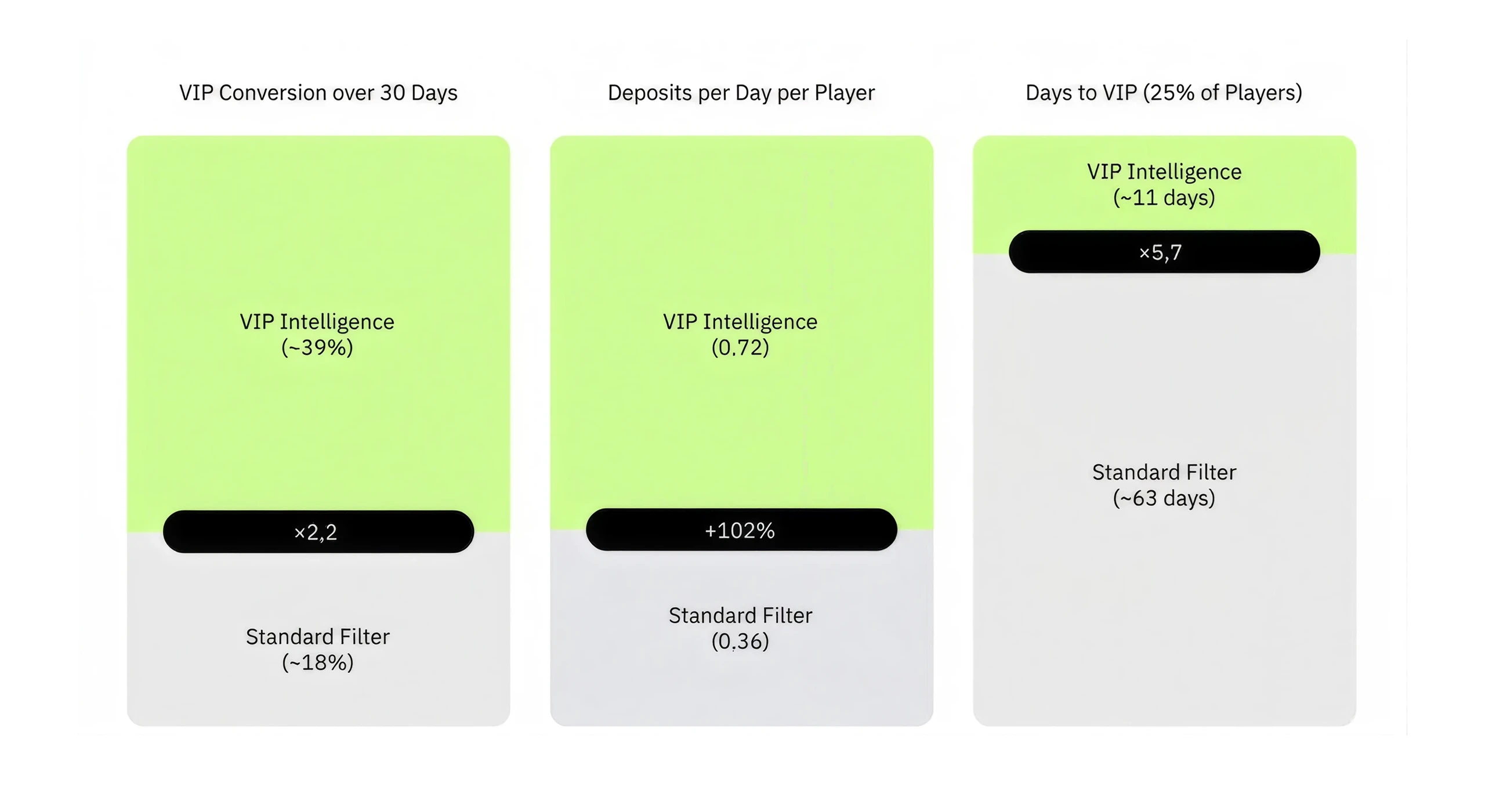
Results from the product's first month on the market:
- Players on the priority list reached the VIP threshold in an average of 11 days thanks to ML-based prioritization. Without ML, this figure was about 63 days.
- With the implementation of Player Intelligence, the retention rate on the 30th day increased from 20% to 31%.
- After the manager's first contact with the high roller, the player's daily NGR increased by ~30%.
Player Intelligence analyzes hundreds of signals that cannot be processed manually
The MICo product operates as a SaaS service and can be integrated via an API or another format convenient for the operator. The ML solution begins its analysis as soon as a player logs into the platform.
In the early days, the algorithm processes behavioral signals that cannot be analyzed manually: session patterns, betting dynamics, deposit frequency, reactions to bonus mechanics, and dozens of other variables.
As a result, each player is assigned a "Confidence" score—the probability that the user will show rapid growth and become a high roller. Managers receive a prioritized list sorted by this score.
Result: The team focuses its efforts on those who are most likely to deliver real value.
Early identification of high rollers directly increases the operator's profits
Thanks to this model, players are brought into the VIP department’s spotlight three weeks earlier. This provides an additional, controllable monetization period for each high roller—without increasing acquisition costs.
The MICo solution helps identify who is currently most receptive to communications. Managers don’t waste time on those who aren’t likely to convert. In effect, this boosts the VIP department’s productivity without hiring new staff.
NGR is growing. From the moment a manager first engages with a player, daily net gaming revenue from that predicted player increases by ~30%.
For an operator with 700k+ MAU, this single product alone can help generate tens of thousands of dollars in additional revenue each month. Simply because the platform stops missing out on high rollers during their most active first few weeks.
VIP Radar can not only identify high rollers before manual selection but also assess the likelihood of their churn. This allows you to quickly develop preventive retention strategies and minimize the loss of valuable users.
The case studies address the most common questions from operators
"The ML product simply identifies those who would have brought in a lot of money anyway."
Managers did not know whether they were working with players identified by Player Intelligence. They treated players the same way both before and after the product was implemented. The differences in deposits, conversion rates, and retention are not due to the players themselves, but rather the result of timely engagement.
"Managers can already see large deposits in the CRM"
They realize it, but it’s too late. A major operator has a user base of tens of thousands of active users, and a manager simply cannot effectively handle more than 100 people a day. 63 days to reach VIP status in a group of hand-selected players—that’s not a theoretical benchmark, but a statistical fact.
"Aggressive attention from the very first week will burn a player out faster."
The data suggests otherwise. Retention among players on the priority list reached 31% on day 30, compared to 20% without ML predictions. Early attention from a manager doesn’t burn out a player; rather, it builds their loyalty to the platform before a competitor does.
ML Prediction Is Becoming the New Standard for Working with VIP Players
The case study shows that an ML solution transforms the economics of working with high rollers not through budgets or bonus policies, but through speed. Player Intelligence identifies the right player from among thousands within 3–7 days—something that would be impossible to do manually.
Operators who are implementing ML today have a head start—they identify high rollers before their competitors do and earn more from each customer lifecycle.
In a few years, predictive VIP identification will become a core tool for any operator—just as CRM is today.
MICo is a full-cycle development company specializing in ML-based product solutions, with its own team of ML specialists and infrastructure for data processing and analysis. The company is certified to the international ISO 27001 standard, which attests to its high level of data security and protection.
How Customer Segmentation Using Machine Learning Improves iGaming Retention
Learn how machine learning for customer segmentation helps identify player groups, optimize retention campaigns, prevent churn & improve iGaming performance.

Player retention has become one of the defining challenges in iGaming. Acquisition can bring traffic and registrations, but sustainable revenue depends on whether players return, deposit again, explore more products, and build trust in the platform. A single generic campaign cannot achieve this for an audience with different motivations, budgets, game preferences, and levels of engagement.
Customer segmentation using machine learning gives operators a more precise way to understand those differences. Instead of treating a player base as one large mailing list, teams can identify meaningful behavioral groups and activate relevant CRM actions. This makes communication more useful, limits unnecessary bonus costs, and helps create retention strategies that respond to actual player needs rather than assumptions.
The objective is not to send more messages. It is to make every interaction more timely and relevant: guide a new depositor through early sessions, recognize a valuable player whose activity is declining, or avoid giving the same incentive to a loyal user and a promotion-only visitor. When segmentation is connected to execution, it becomes a practical retention engine.
What Is Customer Segmentation Using Machine Learning?
Customer segmentation is the practice of dividing an audience into groups whose members share relevant characteristics. In iGaming, those characteristics may include deposit patterns, session frequency, preferred vertical, bet size, bonus usage, time since last activity, engagement with communications, and predicted long-term value.
With machine learning for customer segmentation, the platform does more than apply manually chosen rules such as “players with three deposits” or “users inactive for seven days.” It learns from a broad dataset, detects relationships among many signals, and finds groups that may not be obvious in a spreadsheet. A player’s value is therefore considered alongside their behavior, engagement trajectory, and risk indicators.
A machine learning model can, for example, distinguish between two users who have made the same number of deposits. One may be gradually increasing stake size, trying several game categories, and engaging with content. The other may log in only during promotions and withdraw quickly. Surface-level rules could place them in one group; behavioral analysis shows that they need different treatment.
The outcome is a set of segments that supports better targeting. CRM and retention teams receive a clearer view of whom to contact, what to offer, when to intervene, and when not to spend a bonus budget at all.
Why Traditional Player Segmentation Falls Short in iGaming
Traditional segmentation methods are useful for establishing a baseline. Teams can group users by country, registration date, device, deposit total, or recent activity. These rule-based lists are straightforward to explain and can support simple campaign planning. Their weakness is that they often describe a moment in time rather than the player’s evolving relationship with the operator.
iGaming behavior can change rapidly. A sports bettor may become highly active around a tournament and then disappear after it ends. A casino player may shift from slots to live games, respond differently after a payment issue, or reduce deposits before becoming inactive. Static rules do not always capture the meaning behind these changes, especially when several signals appear together.
Manual data analysis also becomes difficult at scale. Analysts may need to compare transaction history, betting activity, game sessions, communication engagement, withdrawals, device events, and responsible-gaming markers across thousands or millions of records. Even a skilled team cannot consistently review every pattern at the speed required for relevant retention work.
Another limitation is delayed action. A static list might be refreshed weekly or monthly, meaning a player who shows a strong churn signal today may not enter a reactivation audience until the opportunity has passed. Modern customer segmentation models are designed to recognize behavioral movement and update groups more frequently.
The issue is not that rules are useless. Rules work well for clear operational conditions, such as excluding a user from a campaign after an opt-out. However, they should complement—not replace—a data driven approach that can analyze combinations of behavior, preferences, and value over time.
How Machine Learning for Customer Segmentation Works
The practical workflow turns raw events into groups that teams can understand and use. The technical method may differ by operator and technology stack, but the core process follows the same logic: collect reliable data, convert it into useful signals, find meaningful similarities, and connect the result to campaigns or service actions.
Collecting Player Data
Segmentation starts with customer data from the systems that record the player journey. Relevant inputs can include registration details, geo and device information where permitted, deposits and withdrawals, stake and win history, session duration, game or sports-market activity, payment events, bonus participation, support contacts, email opens, push interactions, and responsible-gaming interactions.
The goal is not to collect every possible field without purpose. Operators should select data that can explain engagement, lifecycle stage, and commercial value while observing consent requirements, retention policies, and security controls. A fragmented or unreliable dataset creates misleading results regardless of the sophistication of the model.
Data quality must be checked before modelling begins. Duplicate profiles, inconsistent currencies, missing timestamps, incorrectly tracked campaign events, and disconnected product data can distort the output. A clear data-governance process helps ensure that segments represent players rather than technical errors.
Transforming Data Into Behavioral Signals
Raw transactions alone are rarely enough. The next step is to process information into features that reflect meaningful customer behavior. Examples include days since the last deposit, average session length, change in deposit frequency, share of activity by product, bonus-to-deposit ratio, preferred communication channel, and the trend in net value over a chosen period.
RFM-style signals remain valuable: recency shows how recently a player was active, frequency reflects repeat activity, and monetary measures indicate financial contribution. Yet iGaming segmentation benefits from additional context. A player who deposits regularly but suddenly plays shorter sessions may need attention even if their total value still looks healthy.
This stage enables teams to identify patterns such as rising engagement, payment friction, promotion dependence, or early signs of disengagement. It also makes data from different systems comparable so that the model can work with a coherent view of each player.
Identifying Similar Players
Machine learning algorithms compare these signals across the player base and look for natural similarities. An unsupervised clustering model is often used when the objective is to discover groups without defining them in advance. Depending on the data and business aim, teams may apply clustering, classification, propensity scoring, or a combination of techniques.
The resulting customer segments machine learning process is not just a mathematical exercise. Data scientists and CRM specialists should review whether each group is stable, distinguishable, commercially meaningful, and large enough to activate responsibly. A segment that cannot support a clear action is often less useful than a smaller number of well-defined groups.
Segmentation accuracy should be evaluated through validation and campaign outcomes, not just by how neat a chart appears. Teams can compare groups over time, inspect representative player journeys, and test whether recommended actions improve retention, engagement, or efficiency against a control group.
Creating Dynamic Customer Segments
Once patterns are validated, the operator assigns understandable labels and activation conditions. The output might include “high-value players with declining deposits,” “new casino customers with incomplete onboarding,” or “sports bettors active only around major events.” Each segment should have a defined owner, a suitable message strategy, and restrictions that protect users from irrelevant or excessive communication.
Customer segmentation models machine learning can also be combined with business rules. For instance, a predictive group may be eligible for a retention flow only when it meets regional, compliance, affordability, or responsible-gaming conditions. This avoids the mistake of treating model output as an automatic permission to market.
Continuously Updating Segments
A player is not permanently a VIP prospect, a bonus-focused user, or a churn-risk customer. Their position can change after a deposit, a product switch, a support interaction, or a period of inactivity. Dynamic updates let the operator react to these changes rather than relying on outdated lists.
Refresh frequency should match the use case. Some lifecycle groups can update daily, while time-sensitive triggers—such as a sudden interruption in regular activity—may require near-real-time processing. Monitoring is essential: model performance, segment size, campaign response, and unexpected shifts in data should all be reviewed on a regular basis.
Customer Segments Machine Learning Can Identify in iGaming
The most useful segments are connected to a real decision. They help a team choose an offer, communication cadence, channel, service level, or suppression rule. Below are common examples that can be adapted to the operator’s portfolio, market, and compliance framework.
VIP Players
VIP players typically combine high financial contribution with sustained engagement. They may deposit frequently, maintain long sessions, participate across products, or show a consistent pattern of high-value activity. A broad “high spender” label is not enough: the characteristics of a loyal VIP differ from those of a recent high-stakes player whose activity is volatile.
These users may benefit from priority support, relevant event invitations, tailored game discovery, or a dedicated relationship manager where appropriate. The focus should be on service and recognition, not automatic bonus escalation. Responsible-gaming assessments and local rules remain integral to any VIP strategy.
Future VIP Candidates
Future VIP candidates demonstrate positive movement rather than only high current spend. Their deposits may be increasing, they may explore premium content, return consistently, or show growing engagement without yet meeting VIP thresholds. Early recognition allows a team to build a better experience before the player becomes a high-value customer.
A suitable action could be improved onboarding, curated content, faster help with a payment question, or a measured reward that matches observed interests. The aim is to support genuine loyalty, not pressure a player into higher spending.
Declining Activity Players
This segment contains players whose normal pattern is weakening. Typical signals include longer gaps between sessions, fewer deposits, lower stake volume, reduced campaign interaction, or a sudden drop in activity after a previously stable period. The group matters because timing is critical: a relevant intervention before full inactivity is often more effective than a broad win-back campaign weeks later.
The right response depends on the cause. A player who abandoned a deposit page may need payment guidance, while a user who stopped playing a favorite title could receive a relevant content reminder. A small, targeted message may be more effective—and safer—than an aggressive incentive.
Bonus-Oriented Players
Bonus-oriented players interact strongly with promotions but may deliver limited long-term value once the offer ends. They are not inherently unprofitable or undesirable; some can become engaged customers through a better product fit. However, they should not receive the same incentives as players who show consistent organic activity.
Segmentation helps a retention team test lower-cost rewards, game-specific offers, non-monetary engagement mechanics, or stricter bonus eligibility. This protects promotional spend and reduces the risk of creating behavior that depends solely on discounts.
New Players
New players need a separate lifecycle strategy because early experiences strongly influence later retention. A first-time visitor, a registered non-depositor, and a first-time depositor face different barriers. They may need product education, verification support, payment reassurance, a clear explanation of terms, or recommendations based on initial behavior.
For this group, customer segmentation models should look beyond registration date. The difference between a player who browsed several categories, one who completed a deposit but never played, and one who returned for three consecutive days is highly actionable.
How Customer Segmentation Using Machine Learning Improves Retention
Retention improves when insight is translated into a suitable action. Customer segmentation using machine learning supports this by replacing broad assumptions with timely decisions based on player context. The commercial benefit comes from relevance, appropriate timing, and more disciplined allocation of CRM resources.
Personalized Promotions
A promotion should reflect what a player is likely to find useful, not merely what the operator wants to distribute. Personalized experiences can be based on product affinity, lifecycle stage, recent behavior, historical response, and estimated value. A casino player who regularly engages with a certain genre may prefer a related reward or discovery message, while an event-driven sports bettor may respond better to timely market content.
Personalization also includes restraint. If data shows that a customer rarely uses bonuses, an informative message or service improvement may be more relevant than another offer. This can improve customer satisfaction because communication feels purposeful rather than repetitive.
Better Bonus Budget Allocation
Generic bonus campaigns often spend money on users who would have returned anyway, on people unlikely to respond, or on audiences that primarily chase incentives. Segmentation makes it possible to target a defined group, test an offer against a control audience, and measure incremental lift instead of relying on total redemptions.
Operators can allocate budget toward segments with a credible reactivation opportunity, promising early-lifecycle engagement, or long-term relationship potential. They can also suppress groups for whom a promotion is unsuitable. This more disciplined use of incentives improves efficiency without assuming that every player should receive a bonus.
Early Churn Prevention
Churn is rarely a single event. It often develops through smaller changes: a missed habitual session, lower deposit frequency, shorter gameplay, reduced response to communications, or a shift away from previously preferred content. Predictive analytics can combine these signs to estimate which customers may be moving toward inactivity.
A well-designed workflow then triggers a proportionate action. For example, an at-risk player could receive a relevant reminder, support outreach after an unsuccessful payment attempt, or an invitation to explore content aligned with prior preferences. Interventions should include frequency caps, consent controls, and responsible-gaming exclusions.
Enhanced Player Experiences
Segmentation supports customer experience beyond marketing. It can help product teams understand what different users seek from navigation, game discovery, payment options, or support. If a group repeatedly explores a product but does not convert, that may reveal a usability issue rather than a lack of interest.
A data driven approach also encourages teams to measure the full journey. Retention is influenced by how easily players register, verify identity, make a payment, find relevant content, understand rules, and resolve problems. Better experiences produce actionable insights that marketing teams alone may not uncover.
Higher Customer Lifetime Value
Customer lifetime value grows when a platform earns repeat engagement through relevant value, trust, and consistent service. Segmentation does not guarantee higher value from every player, and it should never be used to promote harmful behavior. Instead, it helps operators invest effort where it can improve the relationship: better onboarding, useful communications, appropriate support, and timely retention measures.
The strongest results usually appear when CRM, analytics, product, compliance, and customer-support teams share the same interpretation of a segment. A model can show what is happening; coordinated execution determines whether the insight creates a better player outcome.
Best Practices for Implementing Machine Learning Segmentation in iGaming
Successful implementation begins with a clear business question, not an abstract demand for AI. Decide whether the priority is reducing early churn, improving first-deposit activation, identifying declining high-value players, controlling bonus costs, or improving cross-sell relevance. A defined target makes it easier to select data, choose a method, and judge results.
Use the following principles when applying machine learning for customer segmentation:
- Start with reliable, consented data and establish a shared definition for key events such as deposit, active session, reactivation, and churn.
- Combine data expertise with operational knowledge. Analysts can build the model, but CRM managers should explain whether the resulting groups are realistic and actionable.
- Keep segments understandable. A smaller set of useful groups is often more valuable than dozens of tiny audiences with no distinct treatment.
- Connect each segment to a clear action, owner, channel, timing rule, and measurement plan before launching a campaign.
- Test against control groups when possible. Measure incremental retention, net value, repeat deposit rate, opt-outs, and long-term loyalty rather than only opens or clicks.
- Monitor model drift and campaign fatigue. Re-train or adjust the model when player behavior, product mix, regulations, or tracking standards change.
- Build privacy, fairness, responsible gaming, and security into the process from the beginning. Limit access to sensitive information, document decisions, and ensure automated actions respect legal and internal policies.
A practical example is a player whose weekly activity was stable for two months but then drops sharply after a failed payment attempt. A dynamic segment can recognize both the behavioral decline and the likely friction point. Rather than sending a generic free-spin offer, the operator can target a compliant payment-support message, then evaluate whether the player returns and completes a deposit.
Why iGaming Operators Need More Than a CRM to Retain Players
CRM for iGaming is just the starting point. Discover why operators need AI-powered retention tools to predict churn, personalize journeys, and grow LTV.

Most iGaming operators do not lack data about players who left, they lack time to retain them. A CRM for iGaming, together with BI systems, gives operators a foundation for data collection and managing customer relationships. However, these tools alone are not enough for handling player retention at a larger scale. This is a task for AI- and ML-solutions. In the article, we’ll look at where CRM remains useful, where ML adds value, and how the two work together.
What Is a CRM in iGaming?
CRM in the iGaming industry stands for Customer Relationship Management. It is an operational environment that helps teams collect data about a company’s clients, run automated campaigns, and communicate with customers through various channels.
Depending on the platform and operator stack, CRM may also receive event data that reflects real-time behavior, predictive scores, loyalty systems, and responsible-gambling restrictions.
Core iGaming CRM Features That Drive Baseline Retention
Capabilities vary across CRM features in iGaming, but common CRM automation features include:
- Creation of player segments based on behavior, value, preferences, demographic factors, and more.
- Audience incentivization with bonuses, exclusive deals, and content.
- Marketing automation and multi-channel communication through email, SMS, push notifications, messengers, social media, and chatbots.
- Management of loyalty systems, including tiers, points or cashback, and reward eligibility.
- KYC and compliance workflow support using identity, eligibility, and restriction statuses to control player access and communications.
Where Rule-Based CRM Starts to Lose Time
A static CRM rule might trigger an action after 14 days of inactivity, when a deposit threshold is crossed, or when a player enters a VIP segment. These rules react only after a predefined condition has been met.
ML works differently. It can combine the direction and sequence of changes in session activity, deposits, betting behavior, and content preferences to estimate a future state before a single threshold has been crossed.
What iGaming Operators Need Beyond CRM
CRM marketing for iGaming can coordinate communications across the player journey once the team knows the audience, trigger, and action. Prediction becomes valuable when those answers depend on future player behavior.
MICo addresses two related but distinct tasks through two products:
- Player Intelligence predicts player value and helps prioritize retention efforts;
- Recommendation System personalizes game discovery.
Behavioral Intelligence
A single session that is shorter than usual or a switch to another game category rarely says enough on its own. The predictive value comes from combinations of signals:
- how deposit and withdrawal behavior evolves,
- which games a player returns to,
- how the user interacts with content.
ML models can learn these relationships from historical outcomes and apply them to current player activity proactively. Unlike a static segment, the model updates its estimate as the player’s observed behavior changes.
MICo's Expertise
In one case study with a 700k+ MAU operator, potential high-value players were selected after three days of activity. We deployed Player Intelligence on the operator’s platform and compared the ML-selected cohort with players selected conventionally. The ML-selected cohort reached the operator’s VIP threshold in 11 days versus 63 days; D30 retention was 31% versus 20%.
Predictive Churn and VIP Detection
Churn probability is just a score. It does not suggest the next best action to prevent the player from leaving. A high score should not automatically trigger an incentive — safer-gambling, eligibility, and jurisdictional controls come first. For eligible players, the team can estimate the expected incremental response to an intervention and validate its business effect through controlled testing.
Recent retention research explicitly contrasts conventional churn-propensity targeting with uplift modeling, which estimates the effect of an intervention. A 2026 study in the International Journal of Market Research found that, in its experimental setting, uplift-based targeting produced more effective retention targeting than conventional churn and response propensity models.
Personalized Recommendations
Game discovery requires a different logic: the relevant content can vary from player to player even within the same CRM segment. MICo’s Recommendation System replaces static or manually maintained game selections with a personalized ranked list.
The model uses operator-specific behavioral, transactional, and contextual signals:
- game activity,
- clicks,
- returns to titles,
- deposits,
- withdrawals,
- location,
- playing pace,
- and player preferences.
Recommendations can be displayed in search results, homepage modules, similar-games blocks, and selections based on saved games. CRM solutions for iGaming can orchestrate player communication, while the recommendation layer ranks content inside the product.
Outcomes Brought by MICo's Solutions
MICo reports that a 250k+ MAU South Asian operator replaced the selection logic in its Recommended Games block without changing the block’s design, placement, or traffic. Over the first 28 days, view-to-click conversion increased by 8 percentage points, D7 retention by 10 points, average deposit by 40%, and GGR per user within that section by 200%.
How AI and ML Transform CRM Marketing for iGaming
GenAI is already widespread in iGaming. According to UNLV and KPMG’s State of AI in Gaming 2026, 81.5% of respondents use generative AI, mainly for text and code generation, customer service, productivity, software development, and testing
Predictive ML adds a decisioning layer to CRM in the gaming industry by estimating churn risk, future player value, or likely response. Evaluation practices also remain limited: 63.9% of respondents rely on internal stakeholder feedback, 25.3% have no structured evaluation process, and only 26.5% use A/B tests or pilot comparisons. Behavioral metrics also do not capture every outcome. If player satisfaction is part of the objective, operators can complement retention and engagement data with structured player feedback.
Building the Right Tech Stack: CRM & Predictive Decisioning
Predictive capabilities can be provided through an external API, embedded natively in a CRMs for iGaming run on data from a CDP or data warehouse, or distributed across several components.
MICo trains models on each operator’s own data and aligns them with the operator’s business definitions. Player Intelligence returns player scores and priorities for CRM and VIP teams, while Recommendation System creates personalized experiences that support player engagement. Both products integrate into the operator’s existing stack and are evaluated against measurable business outcomes. Request a MICo demo to see how predictive ML can work with your data and existing CRM workflows.
Best AI Casino Prediction Solutions for Player Retention
Learn what AI casino prediction software is and how casino AI helps predict player behavior. Compare best casino prediction solution platforms and discover their key features.

AI/ML (Machine Learning) casino software covers several use cases: early VIP detection, churn prediction, Next Best Action, and personalized game recommendations for better player engagement.
In this guide, we’ll explain how each use case can increase iGaming business revenue and share tips on how to choose an AI software that fits your workflow.
What is AI casino prediction software?
AI casino prediction software is a gaming analytics tool that uses predictive algorithms to forecast player behavior. It evaluates dozens of signals, including activity patterns, deposits, bet dynamics, bonus response, and session frequency. As new behavioral data appears, the model updates each player’s potential and churn risk scores.
MICO’s Player Intelligence starts prioritizing player’s potential from the first days of activity.
AI prediction tools shouldn’t be confused with software that manipulates RNGs, odds, payouts, or gameplay. Instead, they provide CRM and VIP teams with predictive insights. Managers receive a ranked list of players who need attention before player activity and value decline.
What AI prediction software does
Algorithms in casino software perform four retention tasks:
- Score players by future value.
- Flag early churn risk.
- Recommend the next best action.
- Rank games by predicted player interest.
Player Intelligence models analyze signals such as deposits, session frequency, bet dynamics, and bonus response. Recommendation engines also use lobby and in-game behavior, including clicks, title choices, returns to specific mechanics, session pace, and play style to build a dynamic feed with multiple games for a personalized experience.
How AI models learn from player data
AI models learn from historical data: player behavior during the first sessions, return frequency, changes in deposits, player preferences, and later outcomes, such as VIP conversion or churn. The model then compares new activity with these patterns and updates its predictions as more events appear. It can estimate both the likelihood of VIP conversion or churn and the player’s interest in specific games.
Key features to look for in AI casino prediction software
Ask four questions when comparing AI casino prediction tools:
- What outcome does the model predict?
- Which data does it use?
- How does it explain the score?
- Where does the output enter the existing workflow?
These questions translate into the following features to check before choosing a tool for your iGaming business.
Early behavioral signal detection
The solution should detect shorter sessions, slower return rhythm, changing bet dynamics, bonus fatigue, longer gaps between deposits, and weaker response to manager outreach. Сombining sequential activity and aggregated player data improves prediction over using either type alone. The output should also show the changes in pattern, confidence score, along with a list of players who need attention first.
Early VIP identification
An Early Detect model should identify high-value potential before standard CRMs flag the player. In this case, VIP managers receive clear priority lists of potential VIPs earlier, which gives them more time to contact players and build relationships while their value is still growing.
MICo’s Player Intelligence starts prioritizing potential VIPs on the first days of activity.
Churn prediction
A false positive means the team spends bonus budget and manager time on a player who was unlikely to leave. A false negative can cost more in VIP retention: if the model fails to flag a high-value player in time, the team will have fewer chances to protect LTV.
Reliable prediction software should let operators evaluate model errors by business cost. The model should provide clear confidence levels, measurable precision and recall, and a workflow that prioritizes cases for CRM or VIP teams.
Player’s potential
A player value model can identify which players are worth investing in and which have reached their growth potential. This gives teams clear priorities, helping them maximize the impact of every interaction while reducing time spent on players with limited future value.
Optimization strategy
An uplift layer can turn potential or churn risk into a right communication with users:
- What offer to use.
- When to send it.
- Which channel to choose.
- Whether the player needs manager contact.
Personalized game recommendations
A Machine Learning recommendation engine should replace one static game list with a dynamic feed for each player. It uses clicks, title choices, search history, returns to game mechanics, session pace, and play style to predict interest across multiple games.
Depending on the product, the engine may use collaborative filtering, content-based logic, or a hybrid model. It forms a pool of candidate titles, combines game properties with player preferences and session context, and ranks the final selection around operator goals.
Integration with CRM and operator infrastructure
VIP and potential scores, churn risk, and game recommendations should fit into the existing CRM or VIP workflow without manual exports or extra sorting. A recommendation engine returns ranked title lists to the lobby, search, or another product section.
For smooth integration, iGaming operators need to confirm the required event data, player-ID mapping, delivery format, update frequency, and where each output will appear.
AI casino prediction software for iGaming operators in 2026
AI casino prediction software in the iGaming industry solves different retention problems.
MICo AI
MICo AI best suits operators that need early detection of VIP players and measurable retention impact. Player Intelligence analyzes dozens of behavioral signals, assigns each player a Confidence score, and gives teams a ranked priority list.
In a 700k+ MAU case, ML-prioritized players reached the VIP threshold in 11 days instead of about 63. Day-30 retention rose from 20% to 31%, and daily NGR after the first manager contact increased by about 30%.
The software works as a SaaS and integrates through an API or another operator-friendly format.
What to check before choosing an AI/ML prediction tool
Because the platforms solve different problems, start by defining the prediction target. Decide what the AI casino prediction model should do and improve:
- early VIP detection,
- churn-risk prioritization,
- identification of player potential
- manager outreach,
- or the next retention action.
Once the target is clear, assess data quality. The model needs stable player IDs, clean event tracking, enough historical data, and consistent definitions of deposits, sessions, churn, and VIP status. CRM and VIP teams should also see the confidence level, key signal changes, and reasons to act on a player now.
Finally, check how the model fits the retention workflow. It should be compatible with the existing CRM, teams, and data stack without manual sorting.
Book a demo and see what your platform can achieve.
What Is Recommendation System in iGaming?
Learn what a recommendation system is in iGaming, how recommender systems work, key recommendation system models, types, examples and future AI-driven trends.

A recommendation engine has become a core part of the modern iGaming experience. Instead of showing every visitor the same lobby, it helps an operator arrange games, bonuses, tournaments, and content around likely interests. So, what is recommendation system technology in this context? It is software that analyses signals such as user preferences, user behavior, device, location where permitted, and recent activity to suggest the next most relevant option.
Put simply, what is a recommendation system for an online casino or sportsbook? It is a decision layer that turns a large catalogue into a more useful, personal journey. A new player may see accessible slot titles and clear onboarding content, while an experienced live-casino visitor may receive a relevant table, event, or tournament card. The goal is not simply to increase clicks. A responsible system should reduce choice overload, improve discovery, and support long-term user satisfaction.
In iGaming, recommendations require extra care. Entertainment choices can change rapidly, player protection rules apply, and promotional content must not be pushed to excluded, self-limited, or otherwise ineligible users. The best systems therefore combine relevance with eligibility rules, consent controls, and safer-gambling logic.
How Does a Recommender System Work?
To answer how a recommender system work, it helps to view it as a pipeline. It collects approved signals, prepares them for analysis, estimates relevance, and displays a ranked selection in a suitable placement. The engine does not “know” a person in a human sense. It calculates which item is most likely to be useful for a particular user under a defined set of rules.
Data Collection
The process starts with input data. Depending on consent, legal requirements, and product design, this can include pages viewed, games opened, sessions, deposits, bet or game categories, device type, language, and time of day. Search queries and search history can also show intent when an operator offers a searchable lobby.
Useful data is not limited to transactions. User item interactions—such as opening a game card, adding a title to favourites, watching a preview, or dismissing a suggestion—help distinguish curiosity from genuine interest. Users data should be minimized, protected, and retained only for legitimate purposes. Sensitive or restricted data must never be used in a way that undermines player safety.
Data Processing
Raw events are noisy. A player can open a title by accident, return after a long break, or sample a game only once. Data filtering removes duplicates, bot traffic, invalid events, and signals that should not affect recommendations. The platform then converts activity into usable features: preferred volatility range, genre affinity, session patterns, language, or interest in live dealer content.
For many platforms, the starting point is a user item matrix: rows represent players, columns represent games or offers, and cells describe interaction strength. At scale, this becomes a large user item matrix with many empty cells, because no player can try every product. Data science methods estimate the missing relationships without treating every click as equal.
Prediction Layer
The prediction layer uses machine learning models to score candidate items. A score might represent the chance that a visitor will open a game, continue a discovery session, or find a content card useful. The model can compare similar players, match game attributes to a profile, or combine both approaches.
Training data should include positive and negative signals. For instance, completed gameplay or an explicit favourite may be stronger evidence than a brief impression, while repeated dismissal can indicate poor relevance. The engine should also apply business and compliance constraints before ranking: an item unavailable in a market, unsuitable for the player’s status, or inconsistent with safer-gambling rules must be removed.
Recommendation Delivery
Finally, the system delivers a short ranked list to the lobby, game page, email, push notification, or in-product message. Placement matters: “Because you played…” may work on a game page, whereas a new-user lobby needs broader discovery. Contextual data—such as channel, current page, local time, or an active event—can improve timing and presentation.
Results should be monitored after launch. A high click-through rate alone is not enough; teams should assess user engagement, conversion quality, complaints, opt-outs, and indicators of responsible product use. Clear labels and easy controls also make recommendations less intrusive.
Why Recommendation Systems Matter in iGaming
An iGaming catalogue can include thousands of slots, live tables, sports markets, promotions, and editorial items. A generic interface makes discovery slow, particularly on mobile. Recommendation system models help operators rank this abundance so users encounter relevant options sooner, rather than scrolling through an undifferentiated list.
For the player, relevance can make the product easier to navigate. Someone who regularly explores low-complexity video slots may prefer an adjacent title with a similar theme or mechanic. A live-casino visitor may value a table suggestion in the right language or within an available stake range. These choices can improve user satisfaction because the experience reflects demonstrated interests instead of a one-size-fits-all campaign.
For the operator, the value extends beyond an immediate conversion. Better discovery can support repeat visits, healthier content exploration, and customer retention. It also gives product teams a structured way to learn what works in each region, channel, or lifecycle stage. However, success should not be measured by revenue alone. A well-governed programme balances commercial KPIs with opt-out rates, fairness checks, eligibility controls, and responsible-gaming safeguards.
Recommender System Examples in iGaming
A practical recommender system example is a personalized game rail in a casino lobby. If a player has engaged with several mythology-themed slots from different studios, the system can surface other titles with comparable themes, features, or pacing. It can diversify the list so that the rail does not show five near-identical games from the same provider.
Another example of recommender system use is a returning-player screen. Rather than presenting a blanket bonus message, the platform may prioritize a recently played game, a saved favourite, or a relevant tournament—only where the player is eligible and the communication passes internal compliance rules. This creates continuity without assuming that every visitor wants the same incentive.
A sportsbook can use the same principle for content rather than casino games. It may suggest leagues a visitor follows, upcoming events related to viewed markets, or educational content for a feature the player has explored. Recommendations should remain informative and optional, not pressure-driven.
A generative ai recommender system example could be an assistant that converts approved catalogue metadata into a brief, plain-language explanation of why several games were selected: “Suggested because you recently viewed live roulette and prefer English-language tables.” Generative AI should explain or summarize choices, while the underlying eligibility, risk, and ranking controls remain deterministic and auditable.
Main Recommender System Types Used in iGaming
The main recommender system types differ in the signals they prioritize. In practice, operators often combine them because a single approach rarely handles new users, new games, real-time changes, and regulatory constraints equally well. These are the most common types of recommendation system machine learning teams adapt for iGaming.
Collaborative Filtering
Collaborative filtering identifies patterns across a population. If people with similar activity tend to engage with certain games, the system may recommend those games to another player with a comparable profile. Collaborative filtering systems can work well when there is enough interaction history and a broad catalogue.
Its weakness is the cold-start problem. A new player has little history, and a new game has few interactions. The system can also over-focus on popular content if diversity and novelty are not explicitly included.
Content-Based Filtering
Content-based filtering looks at item characteristics. For games, this may include provider, genre, theme, RTP category where relevant, mechanics, volatility label, languages, or visual style. It recommends items that resemble those a player has already explored.
This approach is useful when behavioural history is sparse. It also provides clearer explanations, such as “similar to games you viewed in the adventure category.” Accurate and complete catalogue metadata is essential; poor tags create poor results.
Hybrid Recommendation Systems
Hybrid systems blend behavioural and content signals. They may use collaborative scores where there is rich history, content similarity for new items, and rules for exclusions or diversity. A hybrid design often produces more stable outcomes than either method alone.
For example, a ranking can combine genre affinity, similar-player activity, freshness, and a cap on repeated providers. The result remains personalized without becoming repetitive.
Knowledge-Based Recommendation Systems
Knowledge-based systems use explicit rules and product knowledge rather than relying only on historical similarity. In iGaming, they can enforce regional availability, currency support, game restrictions, account status, age verification, or player-protection requirements.
They are valuable when a recommendation must be explainable and safe. A rule can state that a promotion is not displayed to a player who is ineligible, regardless of a predicted engagement score. This is where business logic should take priority over optimization.
Context-Aware Recommendation Systems
Context-aware systems incorporate contextual data that can change from moment to moment. Current device, channel, session stage, market availability, time zone, and a live event may influence what is useful now. A mobile visitor during a short session may need a concise discovery rail, while a desktop user browsing a category page can explore a wider set.
Context should enhance relevance, not create opaque targeting. Operators should define which signals are allowed, document their purpose, and test whether each one produces a meaningful improvement.
Recommendation System Models Explained
Recommendation system models are the technical methods used to transform signals into rankings. The right model for recommendation system depends on catalogue size, data quality, latency needs, governance requirements, and the business question being solved. A sophisticated model is not automatically the best one if it cannot be monitored or explained.
Matrix factorization compresses the user item matrix into hidden factors. Instead of comparing every player with every game directly, it learns patterns such as an affinity for specific styles or mechanics. It is efficient for large interaction datasets, though it needs sufficient historical activity.
Deep learning models can process many features at once, including player activity, game metadata, sequences, and context. They can detect complex relationships, but they need careful validation, reliable training data, and protection against bias. Their added complexity should be justified by measurable gains.
Reinforcement learning can optimize recommendations over a longer journey rather than a single click. It can learn which sequence of content supports a useful experience over time. In iGaming, this approach needs strict guardrails so optimization never conflicts with customer protection or compliance objectives.
Embedding models represent players and items as vectors in a shared space. Similar games or similar behavioural patterns appear closer together, which makes candidate retrieval faster. They are particularly helpful when a catalogue is large and the system must rank many options in near real time.
Sequence models consider order and recency. A person who has moved from browsing game themes to opening live-dealer pages may have a different current intent than their long-term profile suggests. These models can react to changing user behavior without discarding established preferences.
Real-time models update rankings as new events arrive. They are useful for dynamic lobbies, live content, and short sessions. Still, real-time delivery requires reliable event pipelines, latency controls, fallback logic, and monitoring to avoid unstable or inappropriate recommendations.
Challenges of Recommendation Systems in Online Casinos
A useful recommender system definition must include its limits: it is a probabilistic ranking tool, not an objective judge of what a player should choose. Predictions can be wrong, incomplete, biased by historic behaviour, or distorted by poor event tracking. Teams need controls that prevent a model from turning uncertain data into overconfident targeting.
Privacy is another major issue. Operators should collect only necessary data, obtain valid consent where required, protect data in transit and at rest, and offer accessible privacy controls. Players should understand why they see a suggestion and be able to manage personalization where applicable.
Cold start remains a practical challenge. New users and new games provide little evidence, so the engine needs safe fallback recommendations based on transparent catalogue information, popularity within a permitted market, or explicit preferences. Diversity also matters: repeatedly showing the same high-scoring titles can narrow discovery and reduce trust.
Finally, responsible gaming cannot be an afterthought. Recommendations, promotional messages, and timing need eligibility checks, frequency caps, suppression rules, and independent oversight. A model should never bypass a safer-gambling restriction to improve a headline performance metric.
Best Practices for Building an Effective iGaming Recommendation System
Effective recommendation system models begin with a clear purpose. Teams should decide whether they are solving lobby discovery, game similarity, lifecycle messaging, content navigation, or another defined use case. One model should not silently serve every surface simply because the underlying data is available.
- Define player-protection, compliance, and market-eligibility rules before training or deployment.
- Build clean event taxonomy, so views, clicks, gameplay, favourites, dismissals, and conversions have consistent meanings.
- Start with simple baselines, then compare more advanced approaches against them through controlled experiments.
- Separate candidate generation from final ranking, allowing safety, diversity, and availability rules to be applied before delivery.
- Monitor quality beyond clicks: track repeat discovery, complaints, opt-outs, fairness, latency, and customer retention.
- Use human review for promotional logic, sensitive segments, unusual recommendation patterns, and material model changes.
- Provide explanations where appropriate and make it easy for visitors to adjust personalization settings.
- Retrain responsibly, audit feature changes, and keep versioned records of model decisions and tests.
A strong implementation also needs fallback paths. If live data is delayed or a model is unavailable, the interface should show a curated, market-approved selection rather than an empty or unfiltered catalogue. This protects both the user experience and operational continuity.
The Future of Recommendation Systems in iGaming
The next phase of iGaming personalization will combine faster decisioning with better governance. As artificial intelligence tools improve, platforms can use richer catalogue metadata, natural language processing, and real-time signals to make lobbies easier to explore. The central question will remain the same: what is recommendation system technology delivering to the player—genuine relevance and clarity, or simply more pressure to act?
Future systems may interpret natural-language requests such as “show strategy-friendly table games” or “find recently released fantasy slots,” then match them to validated metadata. They may use generative interfaces to explain recommendations in plain language, while a controlled ranking service determines eligibility and final ordering.
The most durable systems will be transparent, privacy-conscious, and designed for sustainable user engagement. They will reward relevance, variety, and informed choice rather than optimizing a single short-term event. For operators, that approach can turn personalization into a long-term product capability rather than a campaign tactic.
AI, ML, and Neural Networks—What's the Difference? We Explain It in Simple Terms
Over the past couple of years, the term “AI” has become the go-to answer to any question about technology. An algorithm selects ads—AI. A chatbot answers questions—AI. A service recommends a movie, game, or bonus—that’s AI, too.

Over the last couple of years, the term "AI" has become the go-to answer to any question about technology. An algorithm selects adverts — AI. A chatbot answers questions — AI. A service recommends a film, a game or a bonus — that’s AI too.
The fact is that this term covers a range of different technologies, each with its own limitations, implementation costs and outcomes. Let’s sort out the differences once and for all.
It is important not to confuse the two: AI is not the name of a single specific technology, but rather a whole class of approaches.
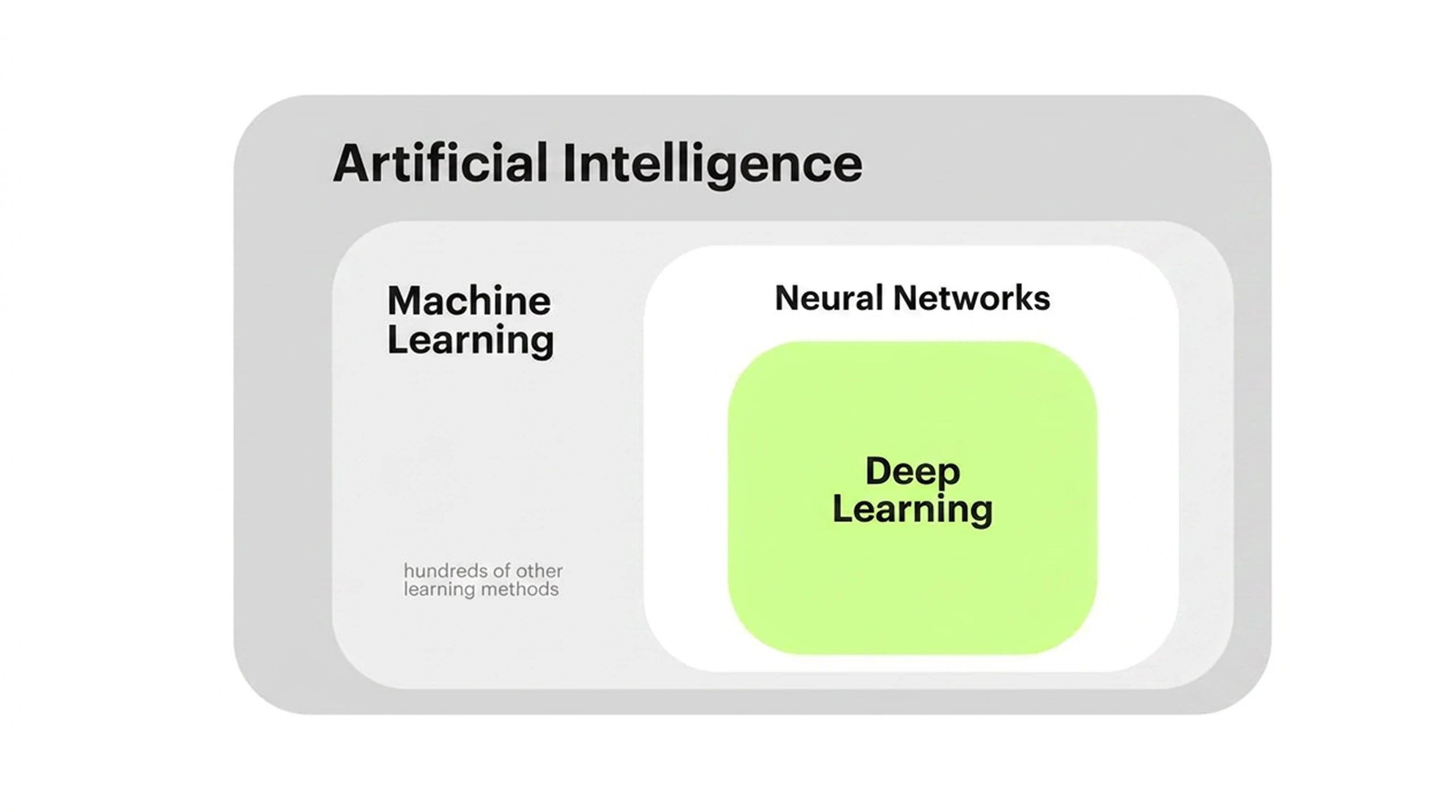
Spoiler: a neural network is one of the tools used in machine learning, and machine learning is a branch of artificial intelligence.
What is AI and how does it work?
Artificial intelligence (AI) is a general term for systems that perform tasks that typically require human involvement: recognising patterns, making predictions, taking decisions, interpreting data or interacting with users.
It sounds broad — because it really is a broad concept. Netflix, which knows that on a Friday evening you want to watch a long sci-fi film starring Actor X on your Smart TV, and on a weekday morning you want to watch a short stand-up routine by the same actor on your smartphone — that’s already AI. The developer didn’t programme the system to know this, but the system identified this connection on its own from millions of micro-interactions specifically with you, and now predicts your choices more accurately than you could articulate them yourself.
To avoid getting confused by the terminology, picture a kitchen.
The kitchen is fully equipped with all the appliances and fittings.
- Machine learning (ML) is one way of cooking. It’s the most popular method today, but it’s not the only one.
- Neural networks are one specific approach within machine learning. They’re trendy and powerful, but not a one-size-fits-all solution. You’ve no doubt come across this in articles discussing which neural network is best at generating content, which is best at generating images, and so on.
In short, it looks like this:
AI → ML → neural networks → deep learning
Why does everyone think that AI = a neural network? And what exactly is a neural network?
ChatGPT, Midjourney, Sora — every publication is writing about them. Yet an ML model that predicts player churn or assesses credit risk operates "behind the scenes", because we don’t have to make any effort (in the form of creating a prompt) to obtain the right content.
This is where the confusion lies: people see the eye-catching interfaces and the impressive results produced by even the simplest query, and start to believe that AI consists entirely of these elements.
In practice, this is not the case.
In a large number of applied problems, it is not generative models that provide the greatest value, but rather more specialised forecasting and optimisation systems.
But let’s take a closer look at what this is all about. At its core lies an idea inspired by the structure of the human brain. Only, instead of a multitude of biological neurons, it uses artificial ones, organised into layers.
Each of these "neurons" receives data, processes it and passes it on through the network. During processing, the neural network identifies patterns in the input data and produces an output — for example, generated text, an image or music.
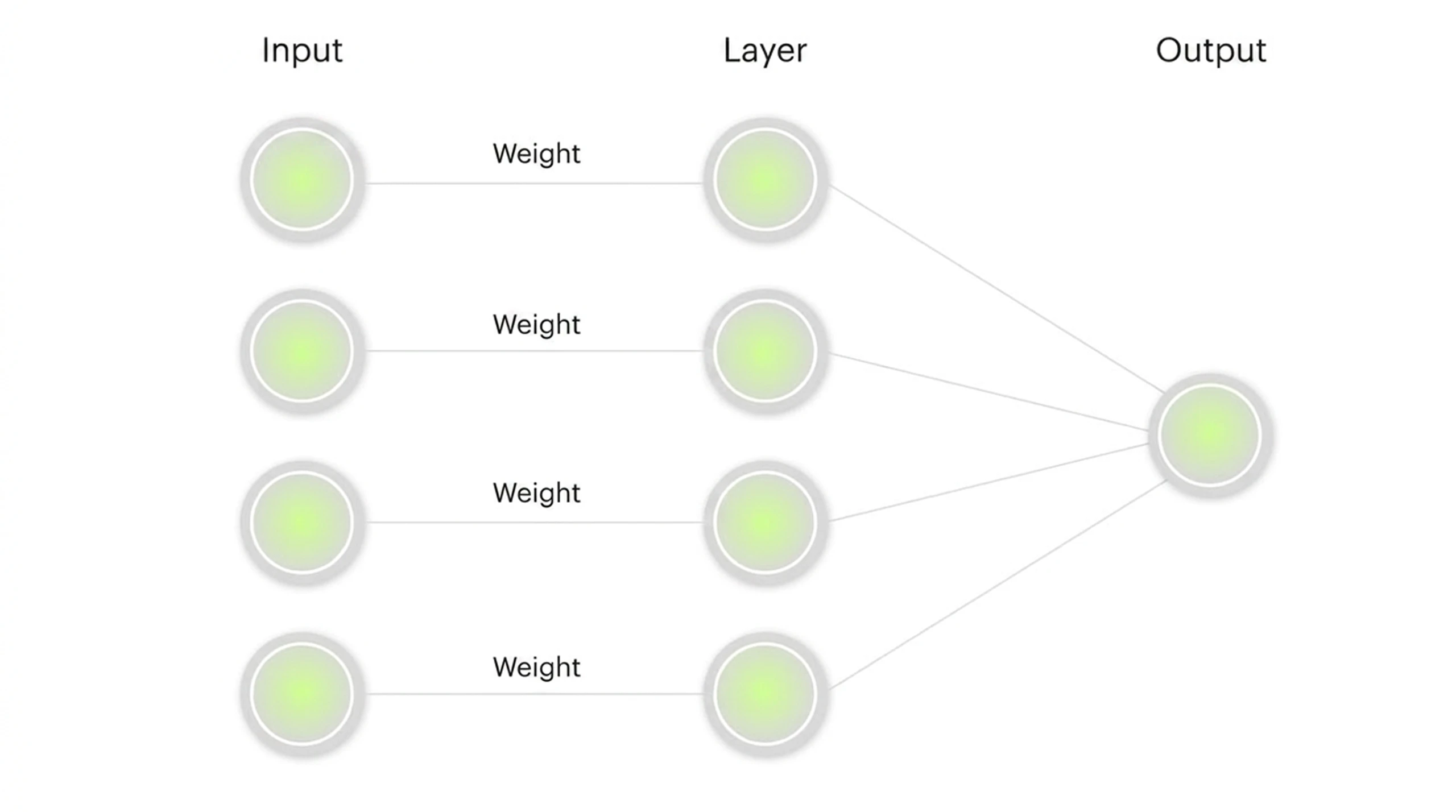
A few layers make up a neural network. A large number of layers constitute deep learning (DL). It’s the same idea, just on a different scale. This is precisely where ChatGPT and Midjourney come into their own.
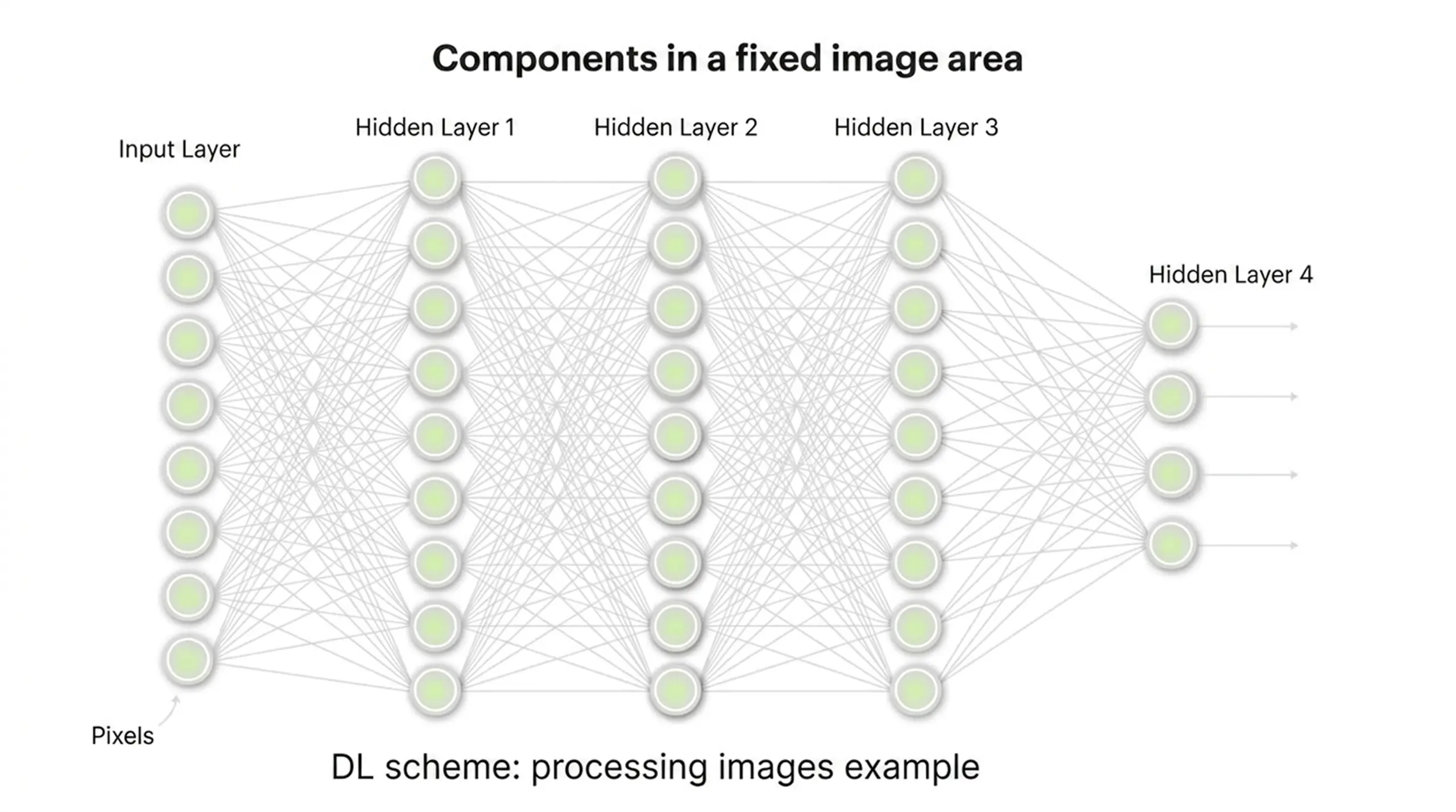
Popular neural networks such as ChatGPT and DeepSeek can handle everyday, straightforward tasks involving text, images and patterns — but this is not enough for business tasks.
So what actually works, then? Let’s have a look.
ML — what it is and when it’s needed
Let’s talk about our industry — iGaming. It’s easy to confuse automation, analytics and machine learning in this field.
Where ML can help drive business growth
- personalised game recommendations;
- player churn prediction;
- assessment of the likelihood of a deposit or repeat session;
- prioritisation of players for retention;
- dynamic offer selection;
- identification of complex behavioural anomalies.
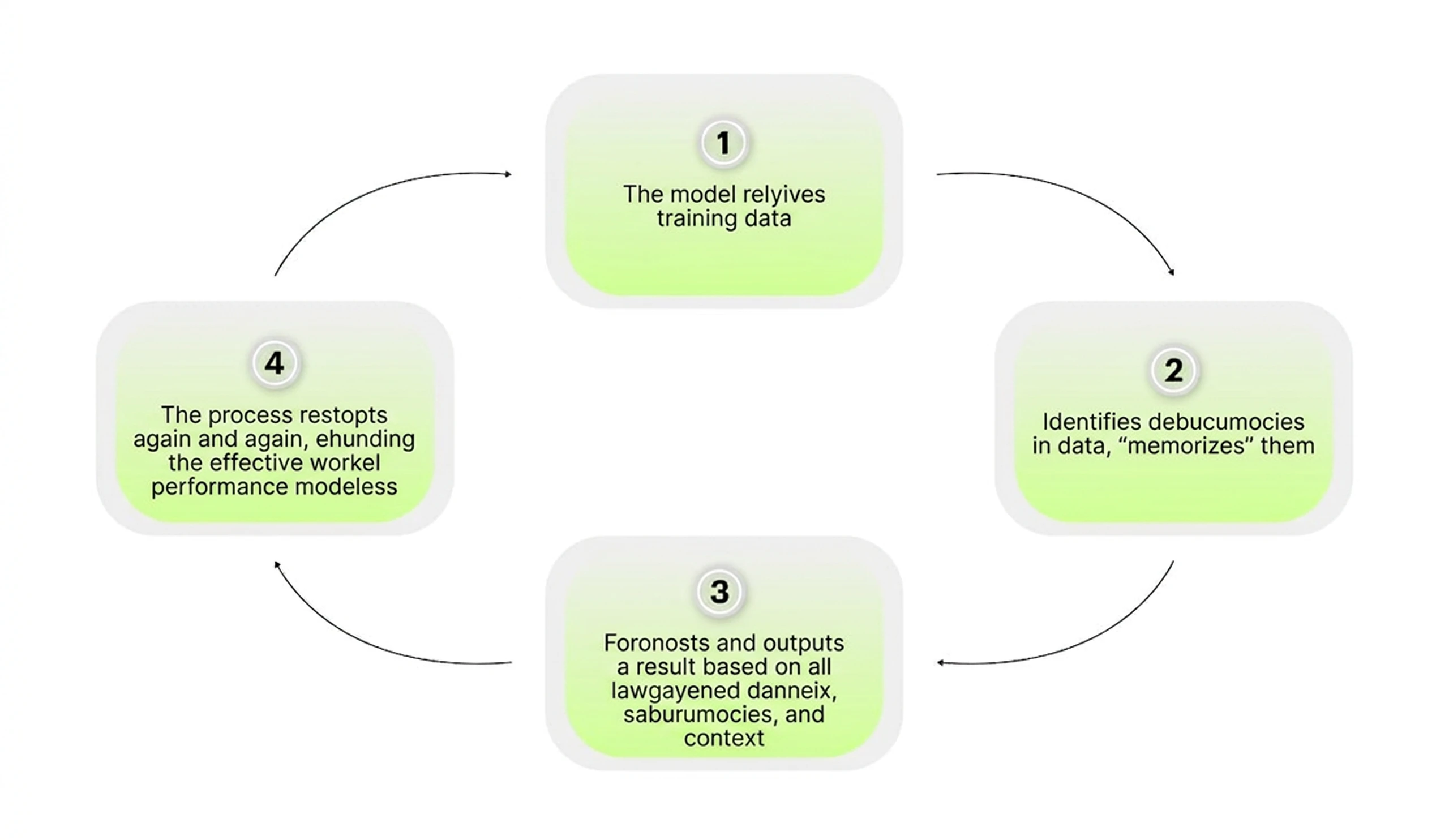
The principle is simple. You provide the model with examples: a history of player behaviour, session results, and deposit data. It looks for patterns — what do those who have left have in common? What distinguishes a future high roller from ordinary users as early as the first week? Once it has identified these patterns, the system memorises them. And when new data comes in, it makes a prediction. There’s no magic involved — just maths.
It might seem that with this approach, you could delegate all the work to a "machine", but ML isn’t always necessary. There are tasks that can be solved perfectly well using fixed rules — there’s no need to invent anything. Here’s a simple test: if a task can be solved using an if-else rule, ML is unnecessary here.
Where a "hands-on approach" is often sufficient
- a bonus upon reaching a set level;
- blocking of bets above the limit;
- a fixed "first deposit ×2" promotion;
- newsletters sent according to a pre-set schedule;
- a simple list of popular games ranked by number of plays.
Other types of ML — and when they perform better than neural networks
A neural network is a powerful tool, but it is not a one-size-fits-all solution. When it comes to working with structured data, it is often other classes of ML models, rather than neural networks, that prove most effective.
The most popular of the classical algorithms are ensemble methods — where several models "vote" on the answer: Gradient Boosting and Random Forest. In iGaming industry applications, these often outperform neural networks in terms of accuracy whilst being less costly.
Classic ML algorithms. They work much like an experienced analyst using a table: they examine the features, weigh them up and produce an answer. In typical application scenarios, they often strike the best balance between data requirements, cost of use, interpretability and model accuracy.
However, for a number of problems, neural network methods are indispensable. In situations where the problem involves unstructured data or complex representations:
- text;
- images;
- speech;
- audio;
- video;
- content generation.
When it comes to recognising, interpreting or creating such content, neural networks are usually the obvious choice.
Choosing a method is not a matter of fashion. It is a question of the task at hand, the quality of the data, and how important it is to explain why the model arrived at a particular decision.
How this works in the real world
There are usually two images of AI in people’s minds.
AI from the films — it thinks, reasons, and is almost human. ChatGPT, which writes poetry and engages in conversation. It’s beautiful and impressive, but it’s not suitable for most business tasks.
AI from the real business world — it takes your data and says: "Players with three or more sessions a day will leave within two weeks if they don’t receive a bonus during their first session after a break. Right now, we need to offer a bonus to these players, but not to those ones".
Here at MICo, as developers of ML solutions for iGaming, we focus on the latter. This is because iGaming operators need predictable, interpretable ML — a tool whose impact can be measured in monetary terms.
The focus here is on answers to specific questions:
- which players need to be retained right now;
- who can be identified early on as potentially valuable;
- where the marketing budget is being spent ineffectively;
- which segments require different communication approaches;
- which actions have the greatest impact on revenue and retention.
AI Automation: A Complete Guide for iGaming Operators
Discover how AI automation can streamline iGaming operations. Explore use cases, AI agents, implementation steps, benefits, risks & practical best practices.

Modern iGaming businesses are moving beyond isolated chatbots and one-off analytics experiments. ai automation connects data, decisions and actions into repeatable workflows: it can react to player behaviour, route risk cases, tailor communications and reduce the delay between a signal and an operational response. For operators, the objective is not to automate every interaction, but to make high-volume processes more consistent, measurable and scalable while keeping people in control of sensitive decisions.
What Is AI Automation?
In simple terms, what is automation in ai? It is the use of artificial intelligence to interpret information, make a bounded recommendation or generate an output, followed by a system that carries out a defined action. Traditional automation follows fixed if/then rules; machine learning learns patterns from data; AI automation combines these capabilities with workflow logic. It can read unstructured data, classify a request, choose an approved path and trigger the next step. The result is not autonomous management by default, but better-supported business processes with safeguards, audit trails and human escalation.
Why AI Automation Matters for iGaming Operators
An operator must make fast decisions across acquisition, retention, payments, support, compliance and player protection. Manual queues struggle when campaign volumes, customer data and market complexity rise. AI and automation help teams process signals at scale, prioritize cases and deliver more relevant experiences without multiplying routine work. This improves response speed, supports personalized journeys and frees specialists to focus on exceptions, strategy and complex tasks. When tied to clear outcomes—such as lower handling time, safer reviews or better lifecycle engagement—business automation can improve operational efficiency while preserving accountable human decision making.
How AI Automation Works in an iGaming Environment
Effective ai for automation works as a connected loop rather than as a standalone model. First, approved sources provide event and profile data. Next, AI models or rules evaluate the context and produce a score, classification, recommendation or draft. Decision logic checks thresholds, permissions and exclusions; integrations then send the permitted action to the appropriate system. Finally, teams review results, exceptions and outcomes. This architecture lets operators automate routine tasks while controlling what a model may access or execute across existing systems.
Data Collection and Integration
A useful workflow begins with reliable inputs from player accounts, CRM platforms, game activity, payment services, marketing tools, customer support and analytics systems. Data integration should resolve identifiers, timestamps and consent status so the workflow sees a coherent customer record rather than disconnected fragments. Data management also includes retention rules, quality checks and access limitations. For example, data extraction can collect a support case and its interaction history, while APIs pass only the fields needed for the next approved task. This is essential when legacy systems make real-time connectivity difficult.
AI Analysis and Decision-Making
After collection, AI systems turn events into operational signals. Machine learning can identify patterns associated with churn, unusual payment behaviour or a likely support category. Predictive analytics can rank customers or estimate the probability of a defined outcome; generative ai can draft a response or summarize a case. Natural language processing helps interpret messages, tickets and documents written in natural language. The model should not make unrestricted decisions: clear business rules set confidence thresholds, excluded groups and escalation conditions. Good data analysis also records why an outcome was produced and whether it proved useful.
Automated Actions and Workflows
The output becomes valuable when it reliably triggers an appropriate, authorized action. Automation tools can place a player in a CRM segment, suggest a game recommendation, route a ticket, create an alert or start a review. An ai assistant may prepare a concise handover for an agent rather than send a final answer automatically. For complex workflows, orchestration coordinates several systems and validates each step before proceeding. Robotic process automation can still perform stable interface-based steps where an API is unavailable, although direct integrations are usually more robust. Workflow automation should always include stop conditions for ambiguous or high-risk cases.
Monitoring, Feedback and Optimization
Deployment is the beginning, not the end. Operators need dashboards for completion rates, model confidence, false positives, escalation volumes, latency and business impact. Feedback from support, compliance and CRM teams identifies weak prompts, missing rules and shifting behaviour. AI model training should use governed, relevant data and be evaluated before release. Monitoring also detects model drift and integration failures that could silently affect business operations. Regular reviews let teams adjust thresholds, prompts, routing logic and automation scope, keeping the process aligned with policy and real operating conditions.
Key AI Automation Use Cases in iGaming
The best ai automation solutions are chosen for a specific objective, a usable data foundation and an acceptable risk profile. A mature operator may begin with low-risk internal assistance, then expand into customer-facing or regulated workflows after proving controls. Selection should reflect technical maturity, the value of the process, the need for human review and the consequences of an incorrect action.
Player Segmentation and Personalization
Automation can group players by activity, preferences, lifecycle stage, device, channel response and other permitted signals. Instead of maintaining static lists, teams can refresh segments as behaviour changes. AI tools can help tailor content, offers and communications within approved rules, while recommendation logic surfaces relevant games or features. The goal is a more useful experience, not indiscriminate targeting: exclusions, consent and responsible-gaming constraints must remain part of the workflow.
CRM and Marketing Automation
CRM teams can automate audience selection, lifecycle triggers, send-time suggestions, channel choices and campaign reporting. Generative models may create controlled message variants for review, while predictive scores help prioritize retention activity. A campaign workflow can detect reduced engagement, check eligibility, select an approved communication and measure the result. Human marketers still define strategy, promotional boundaries and brand voice; automation handles repetitive tasks and provides faster feedback for optimization.
Customer Support Automation
Support automation can classify incoming tickets, retrieve relevant knowledge, summarize prior contacts and route a case to the right queue. Natural language processing is especially useful for interpreting free-text questions and detecting intent. A chatbot may solve straightforward requests, while an agent-assist interface drafts answers and highlights policy guidance for complex cases. Escalation is crucial when a request involves account security, a vulnerable player or a disputed transaction. This model reduces handling time without removing expert judgment from sensitive conversations.
Fraud Detection and Risk Monitoring
Risk workflows can compare current activity with expected patterns and flag anomalies for review. AI systems may identify unusual device, transaction or behavioural combinations, while rule layers enforce known risk indicators. Automated alerts ensure that time-sensitive signals reach analysts promptly; they should not automatically punish a player based on a single opaque score. Teams need documented thresholds, investigation queues and feedback loops so false positives can improve future detection and preserve a fair customer experience.
Responsible Gaming and Player Protection
Automation can support player-protection teams by monitoring permitted behavioural indicators, changes in session patterns and predefined risk signals. It can prioritize a review, create a case or deliver an approved responsible-gaming intervention where appropriate. It should not replace trained specialists or reduce a complex wellbeing assessment to one prediction. Human review, local rules and clear intervention policies remain central, especially when the workflow may affect a player’s account or access to products.
Game Recommendations and Content Discovery
Recommendation engines can use recent play, stated preferences, content attributes and contextual signals to improve discovery. Rather than presenting the same catalogue to everyone, the workflow can rank suitable titles or categories and test whether the suggestion improves engagement. Filters are important: recommendations must respect eligibility, market availability and safer-gambling restrictions. Continuous measurement helps distinguish a genuinely useful recommendation from a short-term click that does not improve the player experience.
VIP and Player Lifecycle Management
Lifecycle automation can detect changes in engagement and help account teams prioritize relationships that need attention. It may trigger an internal task, update a CRM view or recommend the next approved contact based on value, preferences and recent activity. The approach is most effective when it supports—not substitutes for—relationship managers. Human teams should interpret context, avoid inappropriate incentives and decide how to handle sensitive or exceptional situations.
Payments and Transaction Monitoring
Payment operations can use models and rules to identify transaction anomalies, prioritize reconciliation exceptions and surface possible routing insights. Automated workflows can collect evidence, notify the appropriate team and track the status of a case. This reduces manual data entry and shortens the time spent searching across systems. However, payment decisions must remain traceable, secured and consistent with applicable controls; automation should facilitate investigation rather than bypass it.
Compliance and KYC Workflow Automation
Compliance teams often receive high volumes of forms, identity evidence and case updates. Document processing can extract structured fields, compare records, classify missing information and route a file to the right reviewer. AI can summarize a case, but it must operate with auditability and defined approval steps. Automating information extraction and case prioritization lets specialists spend more time on exceptions, enhanced due diligence and decisions that require expertise.
AI Agents for Automation in iGaming
AI agent automation goes beyond a single prediction or a fixed trigger. An agent is a software component that can interpret an objective, consult approved knowledge or tools, plan a sequence and carry out limited actions within defined boundaries. For example, it could investigate a non-sensitive operational issue by gathering approved data, checking a policy checklist, opening a task and reporting the evidence. AI agents for automation are useful for multi step workflows that otherwise require employees to switch between several applications.
The distinction matters. A basic ai automation tool may classify one ticket; an agent-based workflow can coordinate the subsequent steps, verify whether data is complete and escalate when it is not. Yet autonomy must be deliberately constrained. Operators should define tool permissions, maximum actions, prohibited decisions, logging, approval gates and timeout rules. Agents are not a reason to expose unrestricted player data or let an AI change account status without oversight. Their value is reliable orchestration of bounded work, not ungoverned independence.
How to Implement AI Automation in an iGaming Operation
A practical roadmap for AI for process automation starts with a business problem rather than a vendor feature. Establish ownership across operations, product, data, security, compliance and responsible gaming. Document the current process, its inputs, handoffs, failure points and measurable outcome. Then introduce automation incrementally, proving that each stage is accurate, secure and useful before connecting more systems.
1. Identify High-Value Processes
Prioritize processes that are repetitive, data-intensive, measurable and expensive in human effort, but not dependent on unrestricted judgment. Candidate workflows include ticket classification, campaign preparation, internal reporting, evidence collection and status updates. Estimate current volume, handling time, error rate, value at stake and the number of exceptions. A narrow use case with a clear baseline is usually more valuable than an ambitious but vague transformation programme. Avoid automating a broken process before its rules and ownership are clarified.
2. Assess Data and Technology Readiness
Check whether the necessary customer data is accurate, accessible and permitted for the intended purpose. Map integrations, API limits, identity resolution, security controls and data retention. Identify gaps in existing systems and determine whether a reliable interface exists or whether a temporary connector is needed. Readiness also includes governance: who can access outputs, who approves model changes and how incidents are handled. A technically impressive workflow is not production-ready if its inputs are fragmented or its permissions are unclear.
3. Select the Right Automation Approach
Match the method to the problem. Fixed and explainable decisions may need conventional rules. Stable, repetitive screen interactions may suit robotic process automation. Classification, ranking and prediction may justify AI models, while tasks requiring interpretation and coordinated steps can use agents under guardrails. Do not select an AI system simply because it is fashionable; assess accuracy, integration fit, costs, auditability, latency and the need for human decision making. Often, the most reliable design combines deterministic rules with AI assistance.
4. Start With a Controlled Pilot
Launch one defined workflow with a limited audience, fixed duration and measurable success criteria. Compare automated results with a human baseline, test edge cases and record incorrect outputs. Establish a fallback path so employees can intervene immediately. Pilot metrics may include completion rate, average handling time, escalation rate, quality score and impact on the target business outcome. The purpose is to learn where the system works, where it fails and whether the operating model is safe enough to expand.
5. Integrate and Scale
After a validated pilot, extend the workflow carefully to additional segments, markets or connected processes. Reuse integration patterns, access policies, evaluation criteria and monitoring standards rather than rebuilding them each time. Scaling also means training users, documenting procedures and planning for outages. As more automation interacts with legacy systems, dependency mapping becomes essential. Governance must grow with scope: clear owners, change control, periodic reviews and incident response protect the value gained from scale.
Benefits of AI Automation for iGaming Operators
Although the brief may contain the misspelled phrase “ai and autimation,” the correct key phrase is ai and automation. Together, they can improve how an operator allocates time, interprets signals and delivers consistent service. The benefits are strongest when a workflow has a defined goal and measurable controls:
- Faster processing of routine tasks, allowing teams to respond to tickets, alerts and operational changes with less delay.
- More scalable business processes, because a well-designed workflow can perform tasks consistently as volumes rise.
- Better personalization through timely segmentation, content selection and lifecycle actions based on approved data.
- More effective decision support, with predictive analytics and summaries that help specialists focus on high-priority cases.
- Lower manual workload and fewer avoidable handoff errors, particularly in reporting, routing, document checks and administrative work.
- Improved consistency, as approved rules, templates and escalation paths are applied the same way across relevant cases.
- Stronger resource allocation: human resources can concentrate on strategy, relationship management, investigations and exceptions where expertise matters most.
- Opportunities for operational resilience, including predictive maintenance concepts for technical processes where early signals can prevent disruption.
These gains are not automatic. A workflow that saves minutes but creates unreviewed risk is not a successful implementation. Operators should measure quality, compliance, player impact and cost alongside speed.
Challenges and Risks of AI Automation in iGaming
AI automation can create material value, but it also introduces technical, legal and operational responsibilities. Operators need a risk-based design that aligns system capability with the consequences of an error. The following issues should be addressed before deployment and revisited as the workflow changes.
Data Quality and Availability
Incomplete, outdated, biased or fragmented data can lead to weak segmentation, inaccurate predictions and inconsistent decisions. Data from different sources may use conflicting identifiers or definitions, undermining an otherwise capable model. Establish ownership for key fields, monitor missing values and validate labels used for model development. Data quality is not a one-time migration task; it requires regular checks as products, player behaviour and sources change.
Privacy and Data Protection
Player information should be processed only for a lawful, defined and proportionate purpose. Apply data minimization, retention rules, role-based access and careful vendor controls. Avoid sending more personal information than an automated task requires, especially to external AI services. Privacy reviews should consider prompts, logs, model inputs, output storage and cross-border data flows. Clear policies make it easier to use valuable data responsibly without turning convenience into uncontrolled exposure.
Security and Access Control
An automated workflow can act quickly, so its credentials and permissions require rigorous protection. Use strong authentication, scoped API keys, least-privilege access, secrets management and audit logging. Separate environments for development, testing and production; monitor unusual actions and revoke access promptly when roles change. A model should never have broad authority merely because it needs to read a small set of records. Limit what it can execute and require approval for consequential actions.
Model Errors and Hallucinations
Generative outputs may be inaccurate, incomplete or confidently wrong. Predictive models can also perform poorly when conditions change or training data is not representative. Use validation rules, source grounding where possible, confidence thresholds and human review for material outcomes. Test adversarial and unusual cases, not only average ones. A reliable workflow treats model output as an input to controlled decision logic rather than as unquestionable truth.
Regulatory and Compliance Requirements
iGaming operators must consider the rules applicable to gambling, advertising, AML, KYC, privacy and responsible gaming in each relevant market. Automation does not remove these duties; it can make adherence easier only when requirements are embedded in design and operations. Maintain audit trails, policy mapping, review points and evidence of testing. Involve legal, compliance and responsible-gaming specialists before a system affects regulated communications, payment reviews or player interventions.
Over-Automation and Lack of Human Oversight
Not every process should be automated end to end. Decisions involving vulnerable players, account restrictions, disputes, enforcement or ambiguous risk signals may need expert review. Define escalation points, manual overrides and service-level expectations for the people receiving escalated cases. Automation should make human work more informed and timely, not make accountability disappear. The right balance protects players, employees and the operator’s reputation.