



Recommendation System.
Personalized ML recommendations for growing retention and revenue across gaming platforms
At the meeting, we will discuss your objectives and demonstrate how predictive models work with data in real-life scenarios
We’ll send you an email notification so you can receive our newsletter
Over the past couple of years, the term “AI” has become the go-to answer to any question about technology. An algorithm selects ads—AI. A chatbot answers questions—AI. A service recommends a movie, game, or bonus—that’s AI, too.

Over the last couple of years, the term "AI" has become the go-to answer to any question about technology. An algorithm selects adverts — AI. A chatbot answers questions — AI. A service recommends a film, a game or a bonus — that’s AI too.
The fact is that this term covers a range of different technologies, each with its own limitations, implementation costs and outcomes. Let’s sort out the differences once and for all.
It is important not to confuse the two: AI is not the name of a single specific technology, but rather a whole class of approaches.
Artificial intelligence (AI) is a general term for systems that perform tasks that typically require human involvement: recognising patterns, making predictions, taking decisions, interpreting data or interacting with users.
It sounds broad — because it really is a broad concept. Netflix, which knows that on a Friday evening you want to watch a long sci-fi film starring Actor X on your Smart TV, and on a weekday morning you want to watch a short stand-up routine by the same actor on your smartphone — that’s already AI. The developer didn’t programme the system to know this, but the system identified this connection on its own from millions of micro-interactions specifically with you, and now predicts your choices more accurately than you could articulate them yourself.
The kitchen is fully equipped with all the appliances and fittings.
In short, it looks like this:
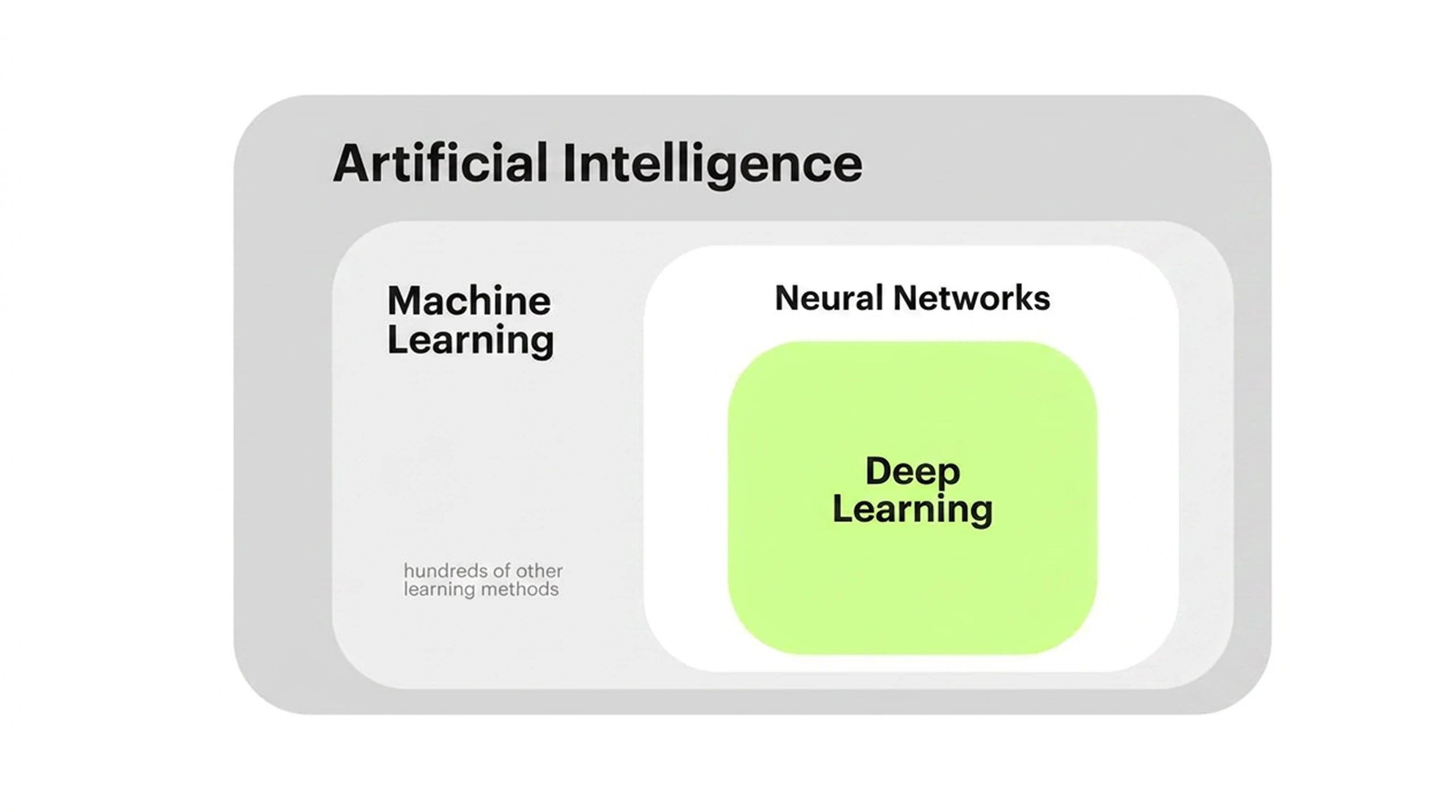
ChatGPT, Midjourney, Sora — every publication is writing about them. Yet an ML model that predicts player churn or assesses credit risk operates "behind the scenes", because we don’t have to make any effort (in the form of creating a prompt) to obtain the right content.
This is where the confusion lies: people see the eye-catching interfaces and the impressive results produced by even the simplest query, and start to believe that AI consists entirely of these elements.
In a large number of applied problems, it is not generative models that provide the greatest value, but rather more specialised forecasting and optimisation systems.
But let’s take a closer look at what this is all about. At its core lies an idea inspired by the structure of the human brain. Only, instead of a multitude of biological neurons, it uses artificial ones, organised into layers.
Each of these "neurons" receives data, processes it and passes it on through the network. During processing, the neural network identifies patterns in the input data and produces an output — for example, generated text, an image or music.
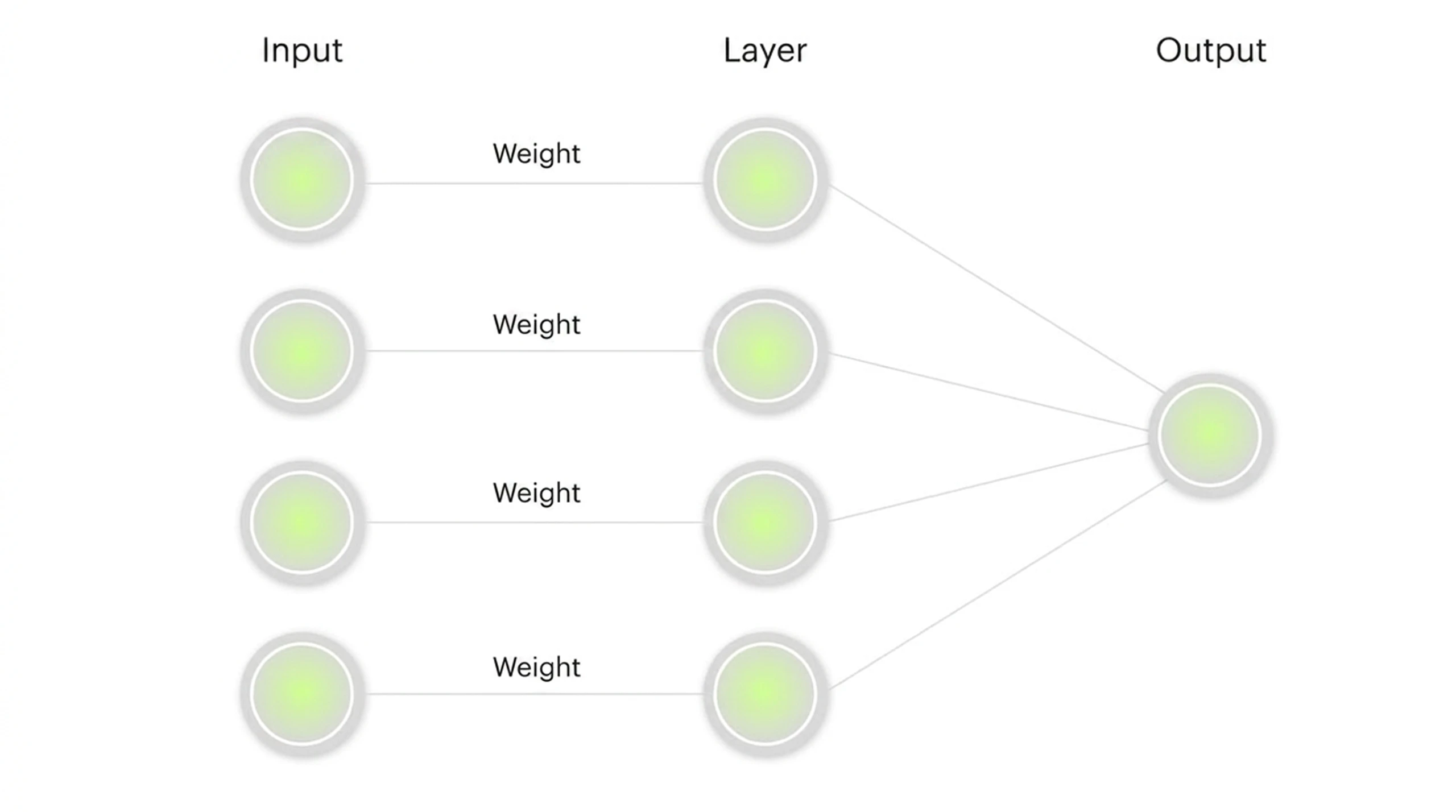
A few layers make up a neural network. A large number of layers constitute deep learning (DL). It’s the same idea, just on a different scale. This is precisely where ChatGPT and Midjourney come into their own.
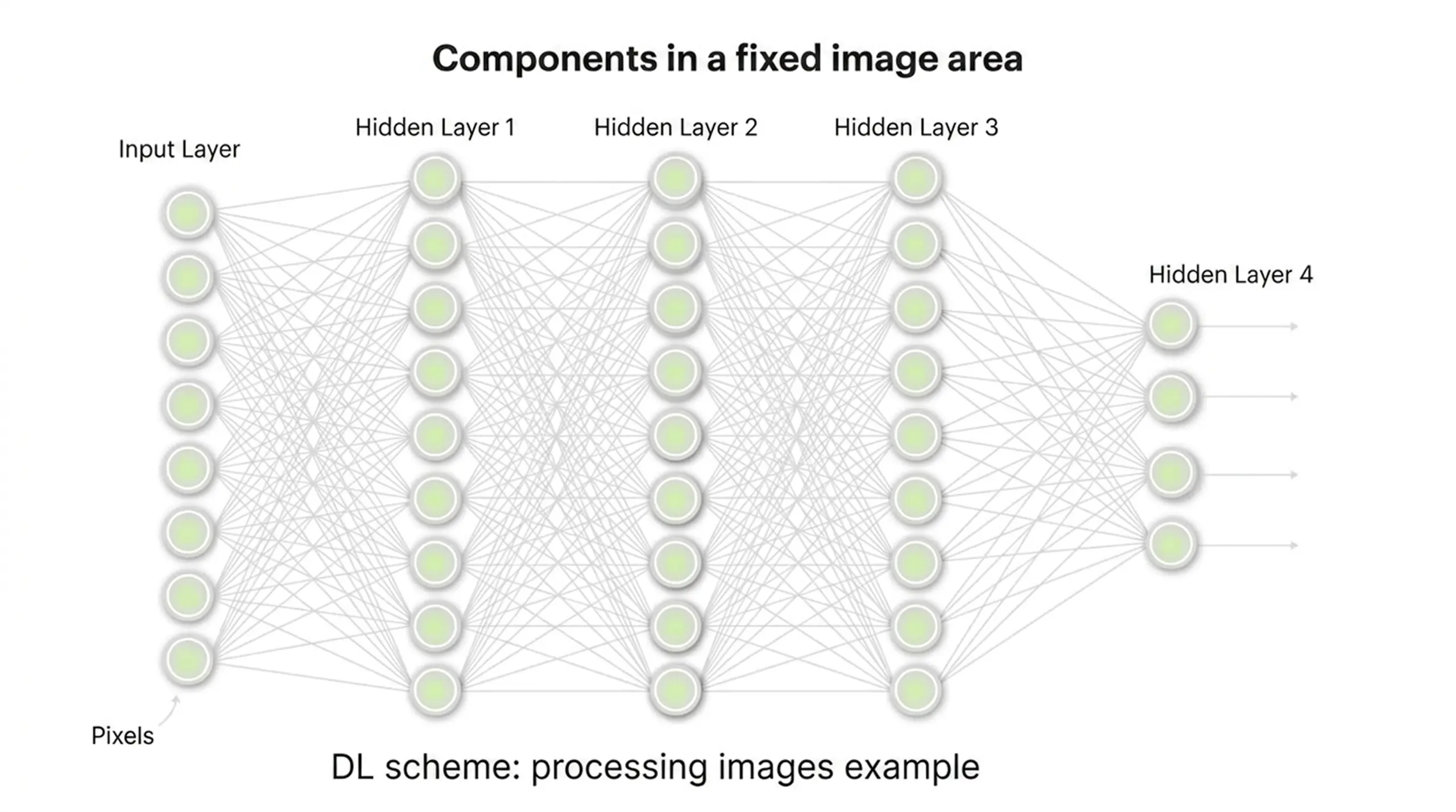
Popular neural networks such as ChatGPT and DeepSeek can handle everyday, straightforward tasks involving text, images and patterns — but this is not enough for business tasks.
So what actually works, then? Let’s have a look.
Let’s talk about our industry — iGaming. It’s easy to confuse automation, analytics and machine learning in this field.
Where ML can help drive business growth
The principle is simple. You provide the model with examples: a history of player behaviour, session results, and deposit data. It looks for patterns — what do those who have left have in common? What distinguishes a future high roller from ordinary users as early as the first week? Once it has identified these patterns, the system memorises them. And when new data comes in, it makes a prediction. There’s no magic involved — just maths.
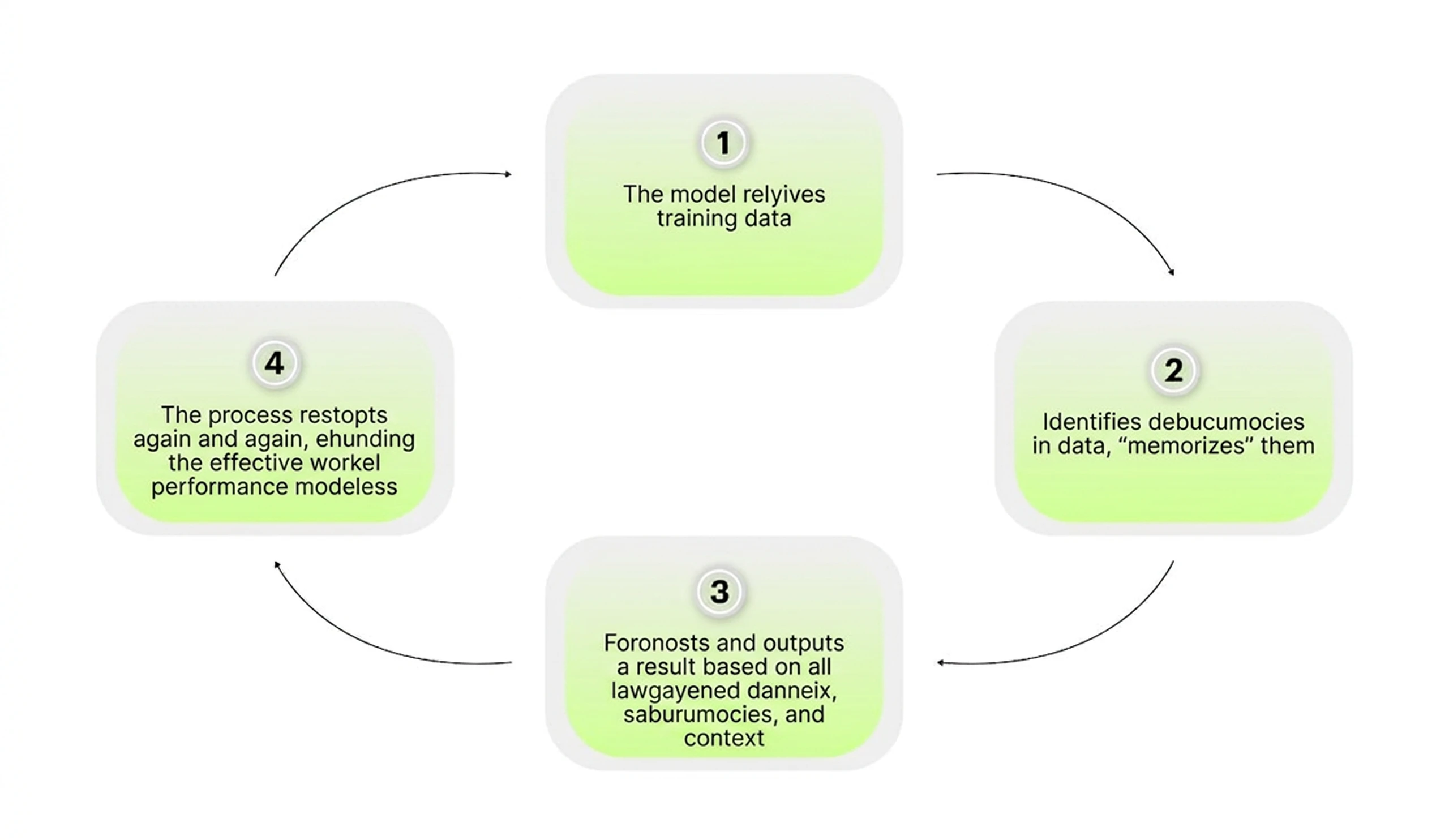
It might seem that with this approach, you could delegate all the work to a "machine", but ML isn’t always necessary. There are tasks that can be solved perfectly well using fixed rules — there’s no need to invent anything. Here’s a simple test: if a task can be solved using an if-else rule, ML is unnecessary here.
Where a "hands-on approach" is often sufficient
A neural network is a powerful tool, but it is not a one-size-fits-all solution. When it comes to working with structured data, it is often other classes of ML models, rather than neural networks, that prove most effective.
The most popular of the classical algorithms are ensemble methods — where several models "vote" on the answer: Gradient Boosting and Random Forest. In iGaming industry applications, these often outperform neural networks in terms of accuracy whilst being less costly.
Classic ML algorithms. They work much like an experienced analyst using a table: they examine the features, weigh them up and produce an answer. In typical application scenarios, they often strike the best balance between data requirements, cost of use, interpretability and model accuracy.
However, for a number of problems, neural network methods are indispensable. In situations where the problem involves unstructured data or complex representations:
When it comes to recognising, interpreting or creating such content, neural networks are usually the obvious choice.
Choosing a method is not a matter of fashion. It is a question of the task at hand, the quality of the data, and how important it is to explain why the model arrived at a particular decision.
There are usually two images of AI in people’s minds.
AI from the films — it thinks, reasons, and is almost human. ChatGPT, which writes poetry and engages in conversation. It’s beautiful and impressive, but it’s not suitable for most business tasks.
AI from the real business world — it takes your data and says: "Players with three or more sessions a day will leave within two weeks if they don’t receive a bonus during their first session after a break. Right now, we need to offer a bonus to these players, but not to those ones".
Here at MICo, as developers of ML solutions for iGaming, we focus on the latter. This is because iGaming operators need predictable, interpretable ML — a tool whose impact can be measured in monetary terms.
The focus here is on answers to specific questions:
Discover how AI automation can streamline iGaming operations. Explore use cases, AI agents, implementation steps, benefits, risks & practical best practices.

Modern iGaming businesses are moving beyond isolated chatbots and one-off analytics experiments. ai automation connects data, decisions and actions into repeatable workflows: it can react to player behaviour, route risk cases, tailor communications and reduce the delay between a signal and an operational response. For operators, the objective is not to automate every interaction, but to make high-volume processes more consistent, measurable and scalable while keeping people in control of sensitive decisions.
In simple terms, what is automation in ai? It is the use of artificial intelligence to interpret information, make a bounded recommendation or generate an output, followed by a system that carries out a defined action. Traditional automation follows fixed if/then rules; machine learning learns patterns from data; AI automation combines these capabilities with workflow logic. It can read unstructured data, classify a request, choose an approved path and trigger the next step. The result is not autonomous management by default, but better-supported business processes with safeguards, audit trails and human escalation.
An operator must make fast decisions across acquisition, retention, payments, support, compliance and player protection. Manual queues struggle when campaign volumes, customer data and market complexity rise. AI and automation help teams process signals at scale, prioritize cases and deliver more relevant experiences without multiplying routine work. This improves response speed, supports personalized journeys and frees specialists to focus on exceptions, strategy and complex tasks. When tied to clear outcomes—such as lower handling time, safer reviews or better lifecycle engagement—business automation can improve operational efficiency while preserving accountable human decision making.
Effective ai for automation works as a connected loop rather than as a standalone model. First, approved sources provide event and profile data. Next, AI models or rules evaluate the context and produce a score, classification, recommendation or draft. Decision logic checks thresholds, permissions and exclusions; integrations then send the permitted action to the appropriate system. Finally, teams review results, exceptions and outcomes. This architecture lets operators automate routine tasks while controlling what a model may access or execute across existing systems.
A useful workflow begins with reliable inputs from player accounts, CRM platforms, game activity, payment services, marketing tools, customer support and analytics systems. Data integration should resolve identifiers, timestamps and consent status so the workflow sees a coherent customer record rather than disconnected fragments. Data management also includes retention rules, quality checks and access limitations. For example, data extraction can collect a support case and its interaction history, while APIs pass only the fields needed for the next approved task. This is essential when legacy systems make real-time connectivity difficult.
After collection, AI systems turn events into operational signals. Machine learning can identify patterns associated with churn, unusual payment behaviour or a likely support category. Predictive analytics can rank customers or estimate the probability of a defined outcome; generative ai can draft a response or summarize a case. Natural language processing helps interpret messages, tickets and documents written in natural language. The model should not make unrestricted decisions: clear business rules set confidence thresholds, excluded groups and escalation conditions. Good data analysis also records why an outcome was produced and whether it proved useful.
The output becomes valuable when it reliably triggers an appropriate, authorized action. Automation tools can place a player in a CRM segment, suggest a game recommendation, route a ticket, create an alert or start a review. An ai assistant may prepare a concise handover for an agent rather than send a final answer automatically. For complex workflows, orchestration coordinates several systems and validates each step before proceeding. Robotic process automation can still perform stable interface-based steps where an API is unavailable, although direct integrations are usually more robust. Workflow automation should always include stop conditions for ambiguous or high-risk cases.
Deployment is the beginning, not the end. Operators need dashboards for completion rates, model confidence, false positives, escalation volumes, latency and business impact. Feedback from support, compliance and CRM teams identifies weak prompts, missing rules and shifting behaviour. AI model training should use governed, relevant data and be evaluated before release. Monitoring also detects model drift and integration failures that could silently affect business operations. Regular reviews let teams adjust thresholds, prompts, routing logic and automation scope, keeping the process aligned with policy and real operating conditions.
The best ai automation solutions are chosen for a specific objective, a usable data foundation and an acceptable risk profile. A mature operator may begin with low-risk internal assistance, then expand into customer-facing or regulated workflows after proving controls. Selection should reflect technical maturity, the value of the process, the need for human review and the consequences of an incorrect action.
Automation can group players by activity, preferences, lifecycle stage, device, channel response and other permitted signals. Instead of maintaining static lists, teams can refresh segments as behaviour changes. AI tools can help tailor content, offers and communications within approved rules, while recommendation logic surfaces relevant games or features. The goal is a more useful experience, not indiscriminate targeting: exclusions, consent and responsible-gaming constraints must remain part of the workflow.
CRM teams can automate audience selection, lifecycle triggers, send-time suggestions, channel choices and campaign reporting. Generative models may create controlled message variants for review, while predictive scores help prioritize retention activity. A campaign workflow can detect reduced engagement, check eligibility, select an approved communication and measure the result. Human marketers still define strategy, promotional boundaries and brand voice; automation handles repetitive tasks and provides faster feedback for optimization.
Support automation can classify incoming tickets, retrieve relevant knowledge, summarize prior contacts and route a case to the right queue. Natural language processing is especially useful for interpreting free-text questions and detecting intent. A chatbot may solve straightforward requests, while an agent-assist interface drafts answers and highlights policy guidance for complex cases. Escalation is crucial when a request involves account security, a vulnerable player or a disputed transaction. This model reduces handling time without removing expert judgment from sensitive conversations.
Risk workflows can compare current activity with expected patterns and flag anomalies for review. AI systems may identify unusual device, transaction or behavioural combinations, while rule layers enforce known risk indicators. Automated alerts ensure that time-sensitive signals reach analysts promptly; they should not automatically punish a player based on a single opaque score. Teams need documented thresholds, investigation queues and feedback loops so false positives can improve future detection and preserve a fair customer experience.
Automation can support player-protection teams by monitoring permitted behavioural indicators, changes in session patterns and predefined risk signals. It can prioritize a review, create a case or deliver an approved responsible-gaming intervention where appropriate. It should not replace trained specialists or reduce a complex wellbeing assessment to one prediction. Human review, local rules and clear intervention policies remain central, especially when the workflow may affect a player’s account or access to products.
Recommendation engines can use recent play, stated preferences, content attributes and contextual signals to improve discovery. Rather than presenting the same catalogue to everyone, the workflow can rank suitable titles or categories and test whether the suggestion improves engagement. Filters are important: recommendations must respect eligibility, market availability and safer-gambling restrictions. Continuous measurement helps distinguish a genuinely useful recommendation from a short-term click that does not improve the player experience.
Lifecycle automation can detect changes in engagement and help account teams prioritize relationships that need attention. It may trigger an internal task, update a CRM view or recommend the next approved contact based on value, preferences and recent activity. The approach is most effective when it supports—not substitutes for—relationship managers. Human teams should interpret context, avoid inappropriate incentives and decide how to handle sensitive or exceptional situations.
Payment operations can use models and rules to identify transaction anomalies, prioritize reconciliation exceptions and surface possible routing insights. Automated workflows can collect evidence, notify the appropriate team and track the status of a case. This reduces manual data entry and shortens the time spent searching across systems. However, payment decisions must remain traceable, secured and consistent with applicable controls; automation should facilitate investigation rather than bypass it.
Compliance teams often receive high volumes of forms, identity evidence and case updates. Document processing can extract structured fields, compare records, classify missing information and route a file to the right reviewer. AI can summarize a case, but it must operate with auditability and defined approval steps. Automating information extraction and case prioritization lets specialists spend more time on exceptions, enhanced due diligence and decisions that require expertise.
AI agent automation goes beyond a single prediction or a fixed trigger. An agent is a software component that can interpret an objective, consult approved knowledge or tools, plan a sequence and carry out limited actions within defined boundaries. For example, it could investigate a non-sensitive operational issue by gathering approved data, checking a policy checklist, opening a task and reporting the evidence. AI agents for automation are useful for multi step workflows that otherwise require employees to switch between several applications.
The distinction matters. A basic ai automation tool may classify one ticket; an agent-based workflow can coordinate the subsequent steps, verify whether data is complete and escalate when it is not. Yet autonomy must be deliberately constrained. Operators should define tool permissions, maximum actions, prohibited decisions, logging, approval gates and timeout rules. Agents are not a reason to expose unrestricted player data or let an AI change account status without oversight. Their value is reliable orchestration of bounded work, not ungoverned independence.
A practical roadmap for AI for process automation starts with a business problem rather than a vendor feature. Establish ownership across operations, product, data, security, compliance and responsible gaming. Document the current process, its inputs, handoffs, failure points and measurable outcome. Then introduce automation incrementally, proving that each stage is accurate, secure and useful before connecting more systems.
Prioritize processes that are repetitive, data-intensive, measurable and expensive in human effort, but not dependent on unrestricted judgment. Candidate workflows include ticket classification, campaign preparation, internal reporting, evidence collection and status updates. Estimate current volume, handling time, error rate, value at stake and the number of exceptions. A narrow use case with a clear baseline is usually more valuable than an ambitious but vague transformation programme. Avoid automating a broken process before its rules and ownership are clarified.
Check whether the necessary customer data is accurate, accessible and permitted for the intended purpose. Map integrations, API limits, identity resolution, security controls and data retention. Identify gaps in existing systems and determine whether a reliable interface exists or whether a temporary connector is needed. Readiness also includes governance: who can access outputs, who approves model changes and how incidents are handled. A technically impressive workflow is not production-ready if its inputs are fragmented or its permissions are unclear.
Match the method to the problem. Fixed and explainable decisions may need conventional rules. Stable, repetitive screen interactions may suit robotic process automation. Classification, ranking and prediction may justify AI models, while tasks requiring interpretation and coordinated steps can use agents under guardrails. Do not select an AI system simply because it is fashionable; assess accuracy, integration fit, costs, auditability, latency and the need for human decision making. Often, the most reliable design combines deterministic rules with AI assistance.
Launch one defined workflow with a limited audience, fixed duration and measurable success criteria. Compare automated results with a human baseline, test edge cases and record incorrect outputs. Establish a fallback path so employees can intervene immediately. Pilot metrics may include completion rate, average handling time, escalation rate, quality score and impact on the target business outcome. The purpose is to learn where the system works, where it fails and whether the operating model is safe enough to expand.
After a validated pilot, extend the workflow carefully to additional segments, markets or connected processes. Reuse integration patterns, access policies, evaluation criteria and monitoring standards rather than rebuilding them each time. Scaling also means training users, documenting procedures and planning for outages. As more automation interacts with legacy systems, dependency mapping becomes essential. Governance must grow with scope: clear owners, change control, periodic reviews and incident response protect the value gained from scale.
Although the brief may contain the misspelled phrase “ai and autimation,” the correct key phrase is ai and automation. Together, they can improve how an operator allocates time, interprets signals and delivers consistent service. The benefits are strongest when a workflow has a defined goal and measurable controls:
These gains are not automatic. A workflow that saves minutes but creates unreviewed risk is not a successful implementation. Operators should measure quality, compliance, player impact and cost alongside speed.
AI automation can create material value, but it also introduces technical, legal and operational responsibilities. Operators need a risk-based design that aligns system capability with the consequences of an error. The following issues should be addressed before deployment and revisited as the workflow changes.
Incomplete, outdated, biased or fragmented data can lead to weak segmentation, inaccurate predictions and inconsistent decisions. Data from different sources may use conflicting identifiers or definitions, undermining an otherwise capable model. Establish ownership for key fields, monitor missing values and validate labels used for model development. Data quality is not a one-time migration task; it requires regular checks as products, player behaviour and sources change.
Player information should be processed only for a lawful, defined and proportionate purpose. Apply data minimization, retention rules, role-based access and careful vendor controls. Avoid sending more personal information than an automated task requires, especially to external AI services. Privacy reviews should consider prompts, logs, model inputs, output storage and cross-border data flows. Clear policies make it easier to use valuable data responsibly without turning convenience into uncontrolled exposure.
An automated workflow can act quickly, so its credentials and permissions require rigorous protection. Use strong authentication, scoped API keys, least-privilege access, secrets management and audit logging. Separate environments for development, testing and production; monitor unusual actions and revoke access promptly when roles change. A model should never have broad authority merely because it needs to read a small set of records. Limit what it can execute and require approval for consequential actions.
Generative outputs may be inaccurate, incomplete or confidently wrong. Predictive models can also perform poorly when conditions change or training data is not representative. Use validation rules, source grounding where possible, confidence thresholds and human review for material outcomes. Test adversarial and unusual cases, not only average ones. A reliable workflow treats model output as an input to controlled decision logic rather than as unquestionable truth.
iGaming operators must consider the rules applicable to gambling, advertising, AML, KYC, privacy and responsible gaming in each relevant market. Automation does not remove these duties; it can make adherence easier only when requirements are embedded in design and operations. Maintain audit trails, policy mapping, review points and evidence of testing. Involve legal, compliance and responsible-gaming specialists before a system affects regulated communications, payment reviews or player interventions.
Not every process should be automated end to end. Decisions involving vulnerable players, account restrictions, disputes, enforcement or ambiguous risk signals may need expert review. Define escalation points, manual overrides and service-level expectations for the people receiving escalated cases. Automation should make human work more informed and timely, not make accountability disappear. The right balance protects players, employees and the operator’s reputation.